Last updated: July 2026 · By Ludovic Mornand, founder of Studio Blackthorns Little Sun’s Calimocho: The Essentials…

The brewing sector is booming in recent years. In this context, it can be difficult to find your place in an increasingly saturated market. Having a quality product, colorful and original packaging, or a busy social media presence is no longer enough to attract consumer attention. Now, more than ever, beer giants as well as craft breweries are turning to new technologies in order to Stand out and make yourself heard.
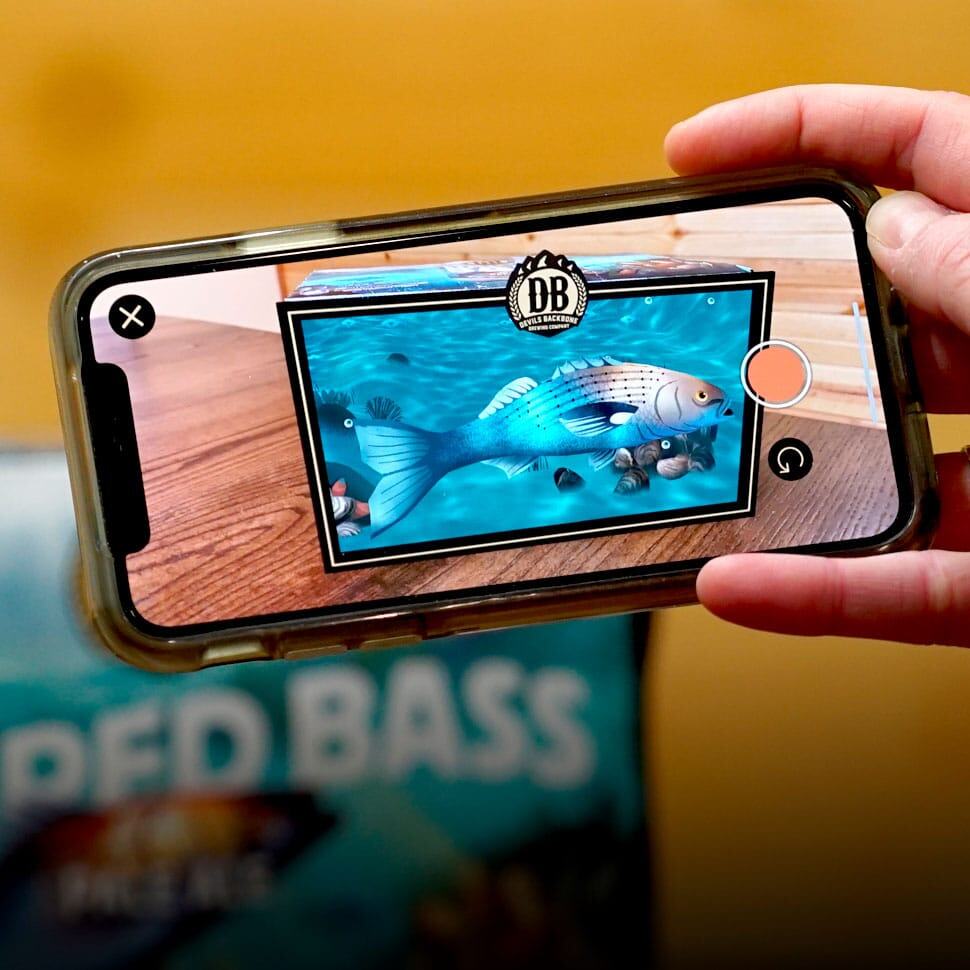
Over the past two years, one of the major trends has been the use of augmented reality (AR). Indeed, the visual recognition of packaging and labels has brands to animate their existing packaging via an application application or web page. In this way, we've seen some great ideas come to life on smartphone screens: from the singing fish of Devils Backbone, British prisoners deported to Australia from 19 Crimes, and music lovers from Marz Brewing.
For some well-established brands, «enhanced consumer experiences» provide a simple, accessible opportunity to entertain the public and establish a social bond. «It's a innovation in packaging design without touching our packaging,» says Matt Lafferty, Associate Marketing Manager at Miller Coors, owner of the brand. Miller Lite.
Miller Lite's first foray into the world of augmented reality Lite, was to create an interactive digital experience for St. Patrick's Day St. Patrick's Day in March 2019. By pointing their phones at the label of a Miller Lite product, users could see a green-bearded green-bearded Irishman dancing next to the can.
«Augmented reality seemed like a logical and obvious new way to celebrate the occasion and help us interact with our aficionados in an our aficionados in an authentic way,» announces Lafferty. The company wanted to test this technology, its main aim being to to add a touch of fun to the consumer experience.
It's an innovation in packaging design without affecting our packaging.
Matt Lafferty, Miller Coors
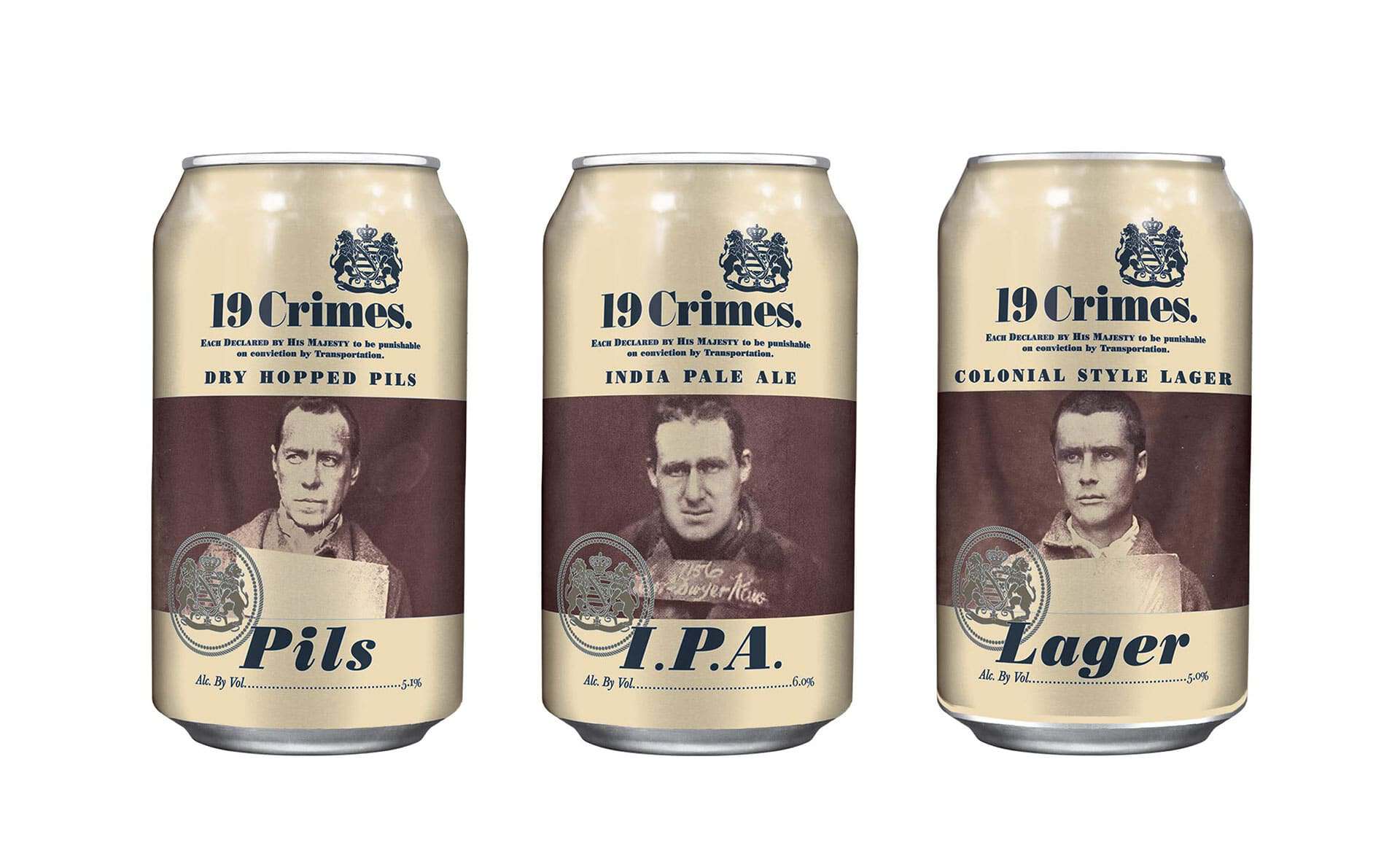
In the meantime, Treasury Wine Estates (TWE) has taken the same approach with its famous Australian brand 19 Crimes. TWE offers an original and sulphurous storytelling based on British prisoners expatriated to Australia to serve their sentences. Initially focused on the wine market, the company recently turned its attention to the brewing sector, launching a range of 3 new beers in the United States. craft beers in 2019. Long story short, TWE's digital experience animates the faces of convicts to depict their tragic stories, and all within their «Living Labels» app. If you'd like to find out more about this experience, we talk about it in our article dedicated to creative uses of augmented reality on alcoholic beverage packaging. For the moment, the AR experiences for their wines and beers are similar. However, they are actively thinking about creating something distinctive for both.
According to Ming Alterman, Director of Digital Strategy at TWE, the company wanted to differentiate itself in a highly competitive craft market, and decided to turn to augmented reality. The idea was to implement storytelling in the most gripping and immersive way possible.
We want to create an enduring digital experience that will keep consumers coming back for more.
Ming Alterman, Treasury Wines Estate
The goal for 19 Crimes is to design a rich experience for consumers. «We want to go beyond a face that speaks for 30 seconds. We want to create a lasting digital experience that will make consumers want to come back,» Alterman tells Brewbound, the digital journal specializing in the U.S. craft market.
Doug Alterman, director of 19 Crimes, said their AR experiment was designed to solidify their brand voice and their identity. Unlike some more education-focused apps such as Angry Orchard's Food + Cider, «ours is different,» he says. Indeed, 19 Crimes prefers to focus its communication around a more historical and cultural concept, rather than dwelling on the «how to» used by most brands in the sector.
The Angry Orchard app, meanwhile, was launched in March 2019. It not only provides interesting tasting notes, but also tips on possible pairings and culinary recipes. All this is is visible when you point your smartphone at the label.
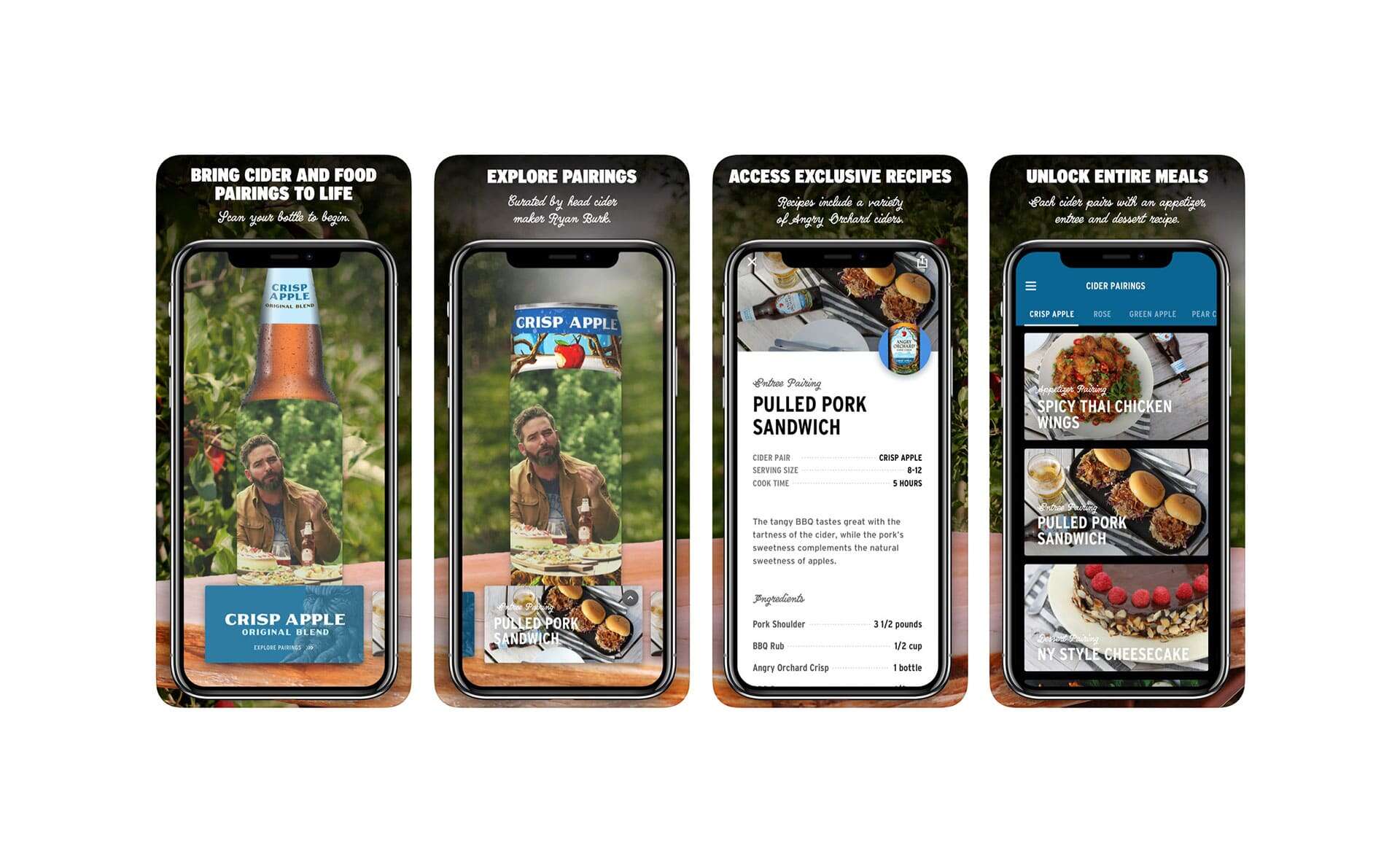
«We're always looking for new opportunities to get consumers consumers to take an interest in cider. We all know that the best way to do this way to do this is to pair your favorite beverage with a good food,» says Ryan Burk, Head of Production at Angry Orchard. Orchard. Angry Orchad regularly updates its application by their recipes and recommendations.
For small craft breweries and emerging brands, augmented reality is a way of bringing information about the product and the brewery to new consumers without having to redesign the packaging.
The technology behind augmented reality involves the creation of a digital mask that perfectly envelops the label or tag. can design. The AR application then brings the graphics and illustrations to life when the phone's camera is pointed at the label.
The process requires a team and investment, and the application requires regular updates on the Appstore and Google Play. In terms of software used, agencies have different tools, each with its own advantages and disadvantages. Some of the trendiest are Vuforia (which goes hand in hand with Unity 3D), Zappar (and its Zapworks tool) and Facebook's Spark AR.
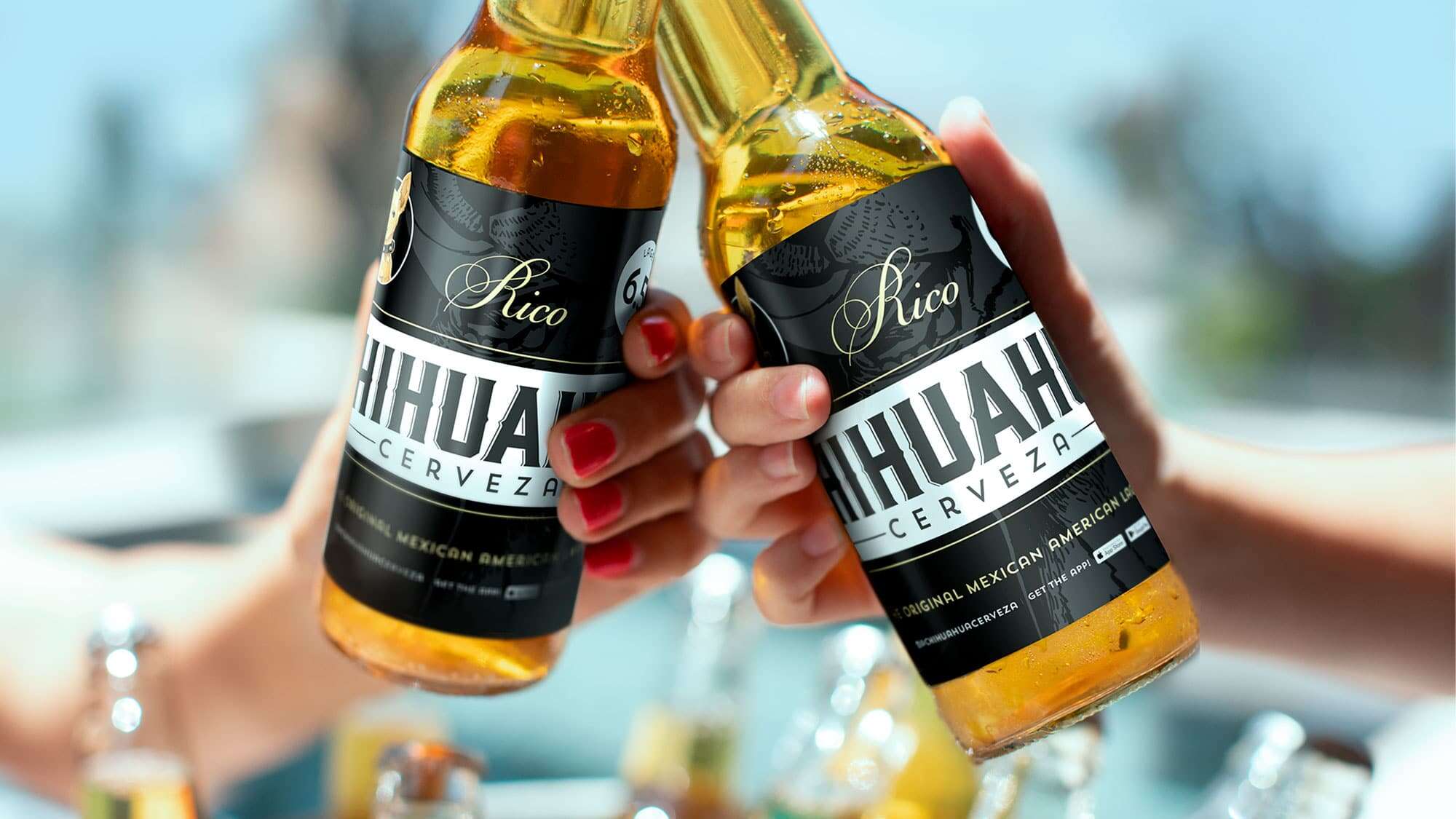
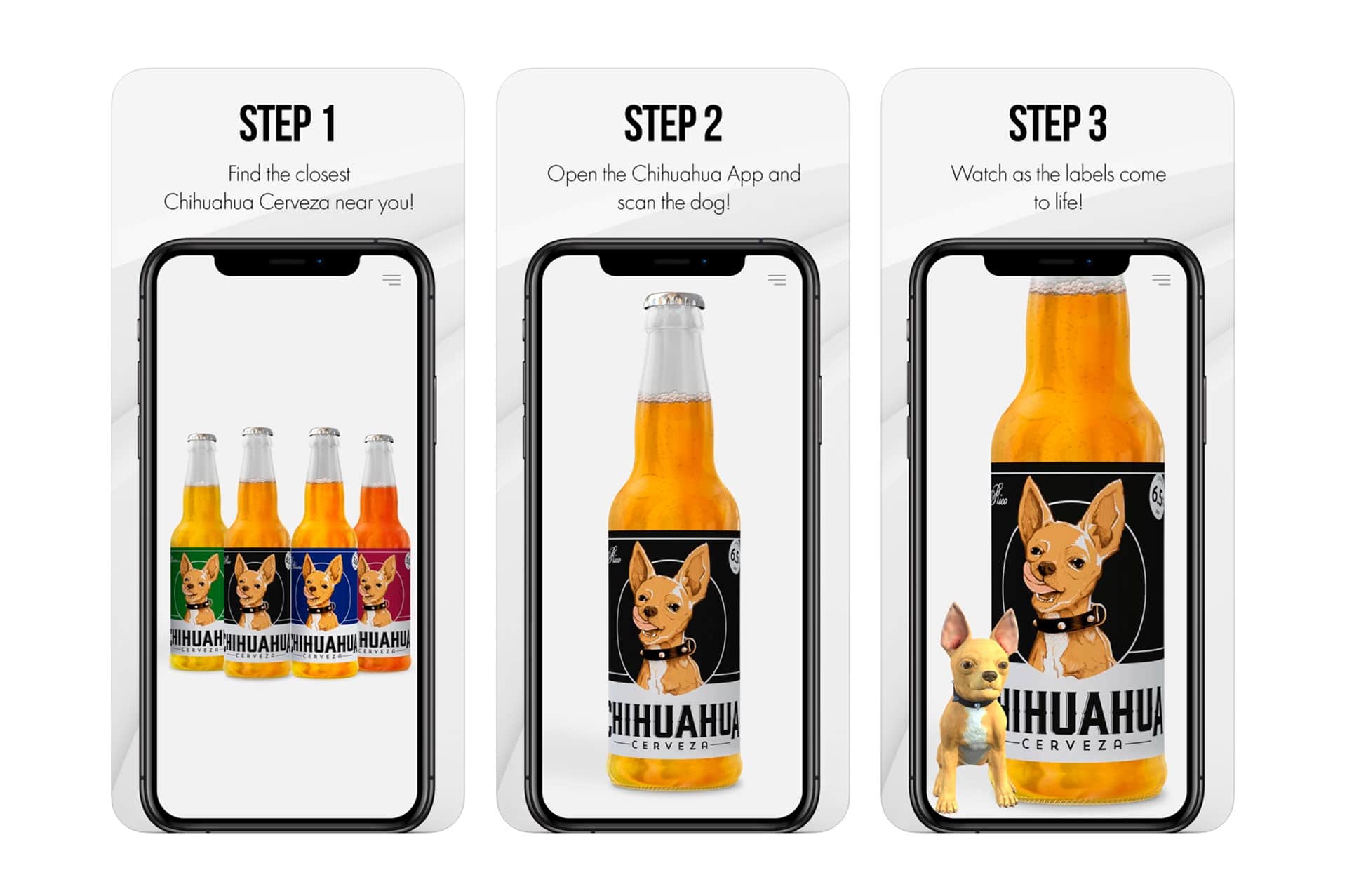
«We're the Chihuahua Brewery for a reason - we make Mexican lagers. We're little Chihuahuas, but we bark loud,» exclaims co-founder and president Phil Jamison. «We have to fight pit bulls and find a way to communicate with our consumers.» As the brewery expanded its distribution to Florida in 2019, Jamison said augmented reality would be a central part of their Brand Research. «It's a whole different perspective, different from a TV spot or billboard ad,» he says. «You pick up a bottle and instantly hold the message in your hands.
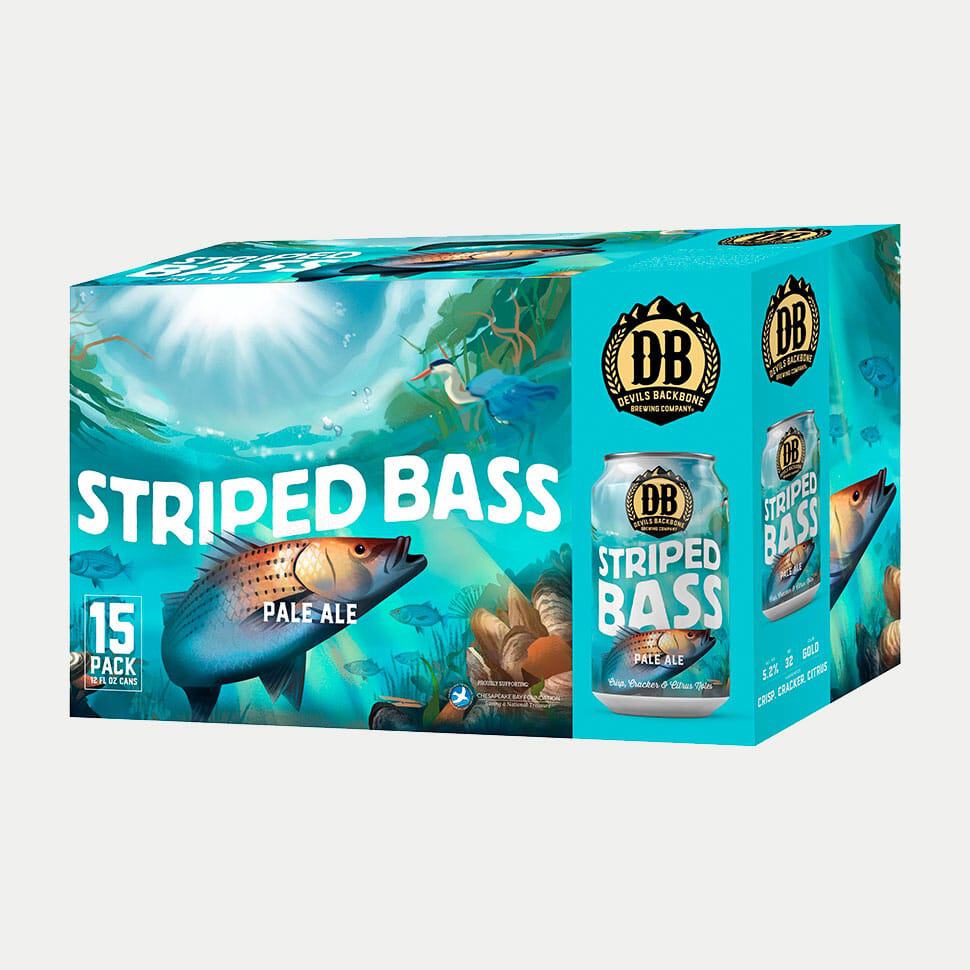
Devils Backbone developed a similar strategy, turning to augmented reality after a rebranding of their packaging. «We were working on our packaging and realized that we no longer had enough space on the packaging to include certain important aspects,» says marketing director Marisa Black. «We were looking for an alternative way to communicate this.» As a result, augmented reality came into play with their digital experience for their «Striped Bass Pale Ale» beer. It showcases their charity efforts with the Chesapeake Bay, on America's east coast.
Additional information about the brewery and their beers is also provided on their app. Devils Backbone collaborated with advertising agency R&R Partners to create their AR experience, but declined to comment on the cost of creating and implementing such a digital strategy.
This technology is still in its infancy. For most breweries that have already carried out an AR experiment, it remains a first. Nevertheless, we can identify a few markers to measure the success of their efforts. Indeed, it is possible to obtain KPIs to find out how many people have interacted with these platforms.
TWE, selling its new beers in the U.S. and Australia, are able to track the cities and states that use their app. Their aim is to use this data to expand their brand nationwide. For its part, Devils Backbone has achieved good results in terms of app usage, accompanied by real user enthusiasm since its launch. In stores, thanks to augmented reality, Marisa Black reports that the brewery has seen «double-digit growth».
«We've had an excellent download rate over the last 30 days,» explains Black. «Over 5,000 consumers have viewed our AR experience and we now have around 1,000 active users. This continues to grow and our consumers continue to use our app when they take a pack home.».
From the Chihuahua brewery's point of view, Jamison says that using this technology is a "real challenge". marketing strategy for their brand. «We're not looking for an instant ROI like ‘if it doesn't work, we'll stop everything»,» he says. «It's a lever we can use to develop the brand over the next 3-5 years.».
Augmented reality is one of the most exciting trends of the moment.
Matt Mason, R&R Partners
Interest in augmented reality is growing rapidly, according to Matt Mason, Director of Strategy at R&R Partners. «Augmented reality is one of the most exciting trends of the moment,» he says. he says. «Every week, new brands approach us with their AR projects. submit their AR projects.
R&R Partners has developed experiences for Boeing, Facebook, the «Life is beautiful» festival and the city of Las Vegas. Mason points out that the investment made by Facebook, Google and Apple in this technology is a good indicator of current and future trends. What's more, the majority of the population already owns smartphones with built-in cameras, equipped with AR capability. This makes it easier for the general public to implement this technology.
«Now, the challenge for brands is to find a way to to activate a technology that's already there,» says Mason. Some brands are also trying to push the boundaries of augmented reality. 19 Crimes is currently exploring the possibility of using voice voice recognition for their labels. The Chihuahua brewery is doing brewery is doing the same, working on an AR experience that allows consumers to use voice commands. As companies continue to push the boundaries of innovation, Mason predicts that beer aisles could soon take a totally immersive turn. immersive.
«There will quickly be a consumer expectation. One day, it will be normal for every product to have its own augmented reality experience,» he says. «I think that within two years, consumers will be able to find themselves in that same aisle with the ability to scan all the products. They'll be able to receive contextual information and even unique experiences.
According to an article in Brewbound, written by Erin Cabrey.


Related articles
Last updated: July 2026 · By Ludovic Mornand, founder of Studio Blackthorns Little Sun’s Calimocho: The Essentials…
The global coffee and tea market is constantly evolving to meet changing consumer demands. À...