The emergence of NFT and Web3 in the beer, wine and spirits market
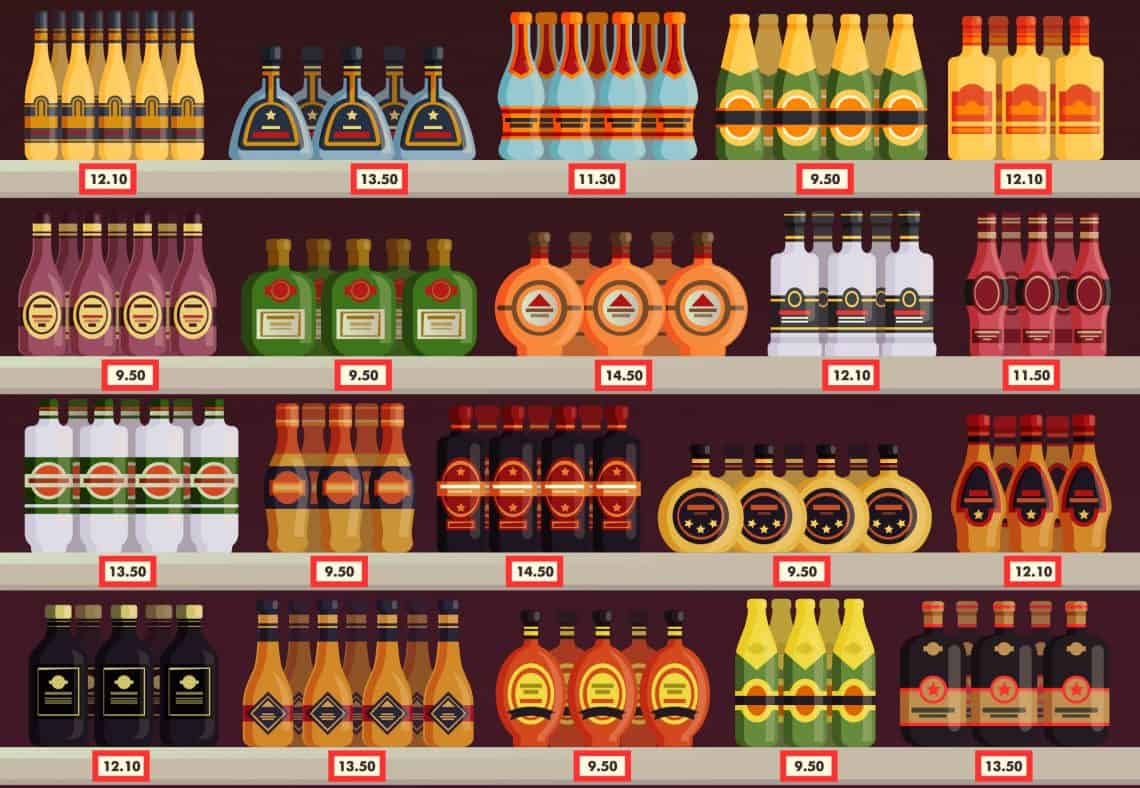
NFTs - or non-fungible tokens - hit the headlines at the end of 2021. Some NFTs have sold for over $60 million. In the artistic sphere, alternative musicians such as Grimes and Aphex Twin have helped fuel the buzz. So it was only to be expected that one of the most Googled technological phenomena of 2021/2022 would slowly but surely make its way into the beer, wine and spirits industry.


If harnessed intelligently, NFTs could well introduce brands in this industry to new sales methods, as well as new ways of interacting with modern consumers. However, Studio Blackthorns would like to warn beverage and spirits producers by sharing some important information about the threats to the environment when using this type of technology.
So, for or against the emergence of NFTs and Web3 on the Internet? the beverages and spirits market ? Make up your own mind at the end of this feature, listen to the SuperPotion™ podcast « Metaverse, avatars, NFT, VR/AR: a journey into the immersive spaces of Web3 »(👇👇👇) and don't hesitate to Contact us to share your thoughts with us.
What is an NFT spirit?
Definition
An NFT is a unique digital asset. It can be an image, video, illustration or animation, existing in the form of a unique digital token and living on the blockchain (mainly Ethereum). Although consumer education in NFT remains relatively low, brands of all stripes are gradually entering this market. Companies such as Prada, Gucci, D&G , McDonald's, Instagram and even Campbell Soup Company are all interested in this new techno-cultural phenomenon. These brands are attracted by the avant-garde image they can benefit from, as well as by the booming market.
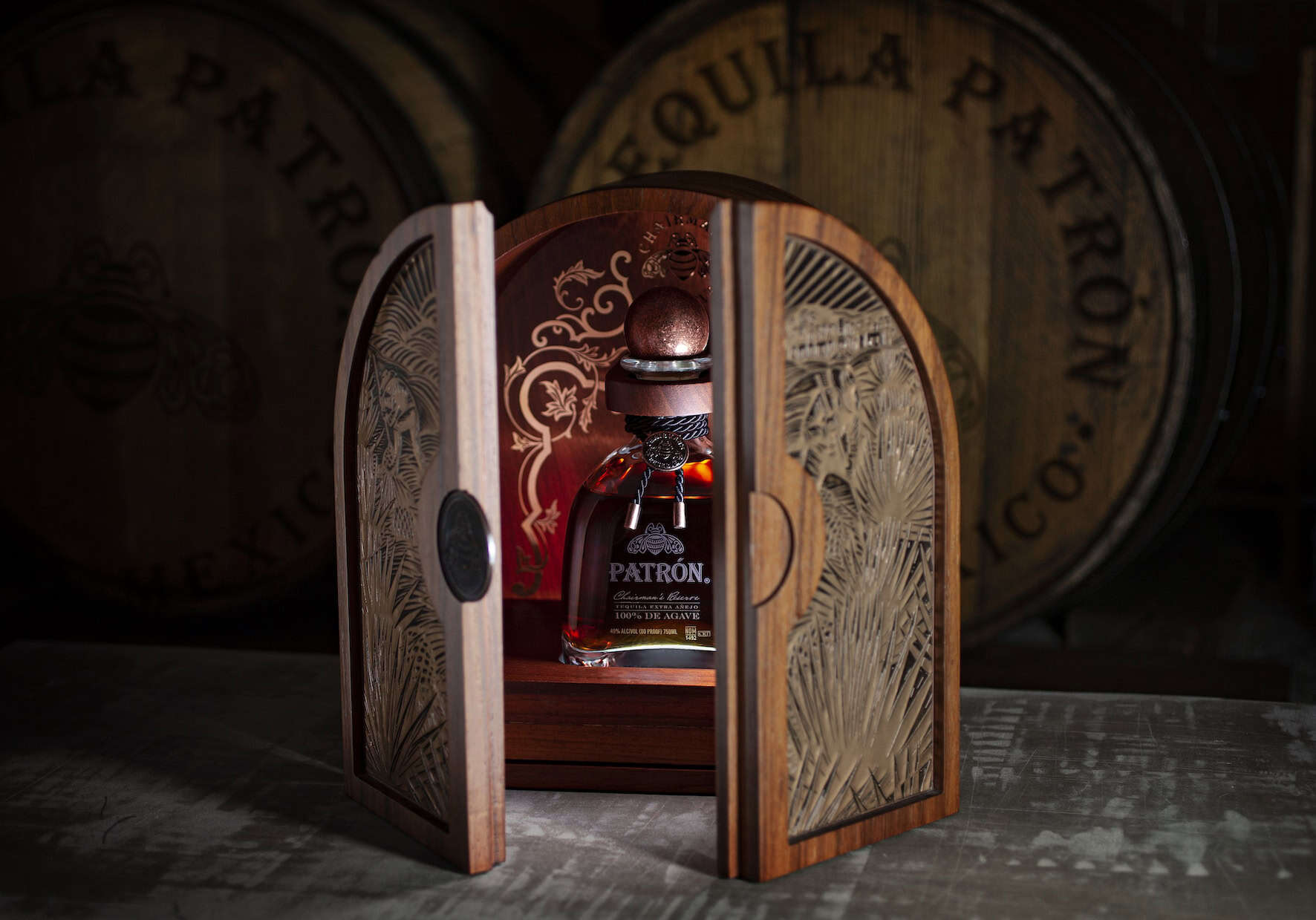
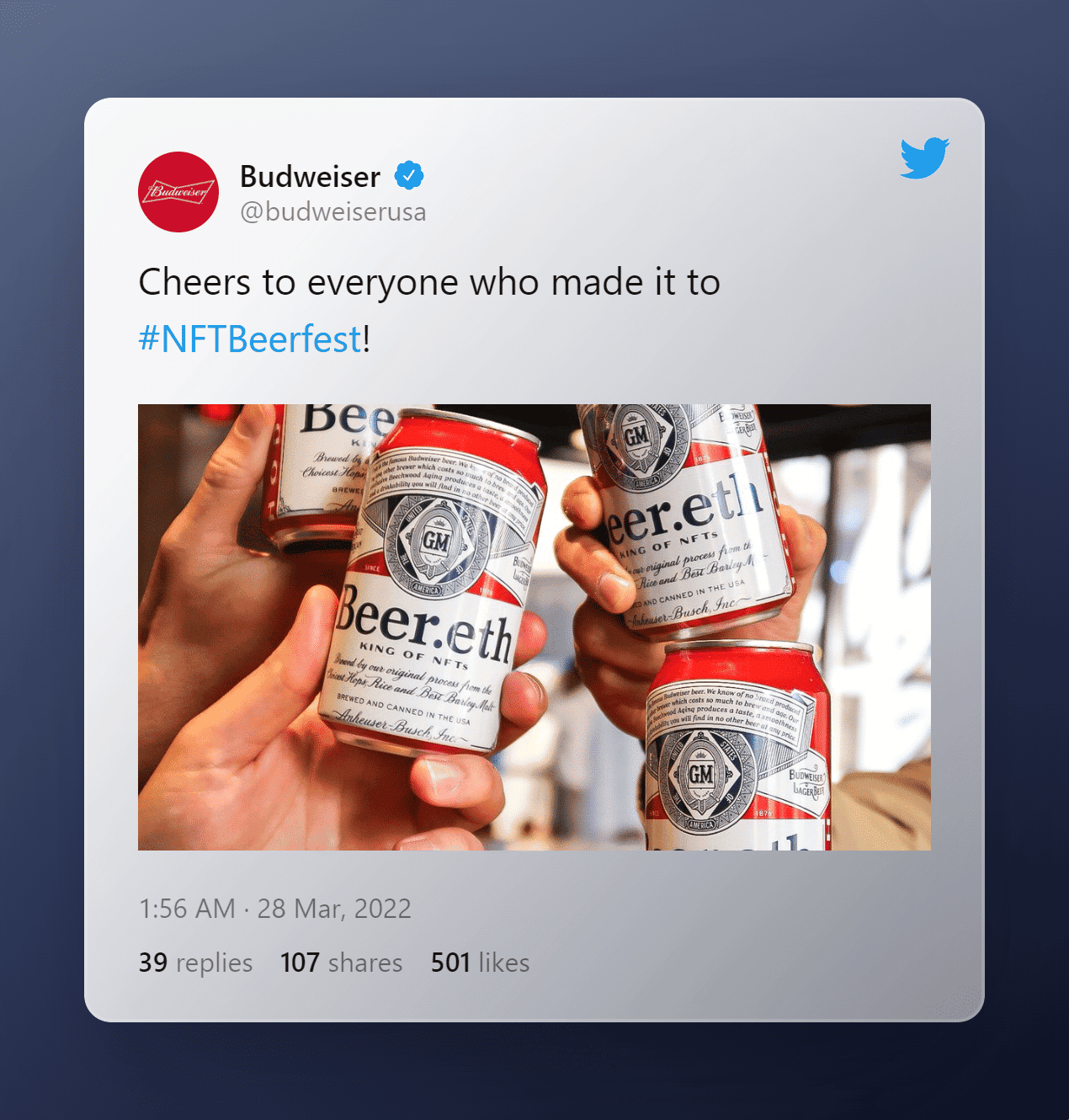
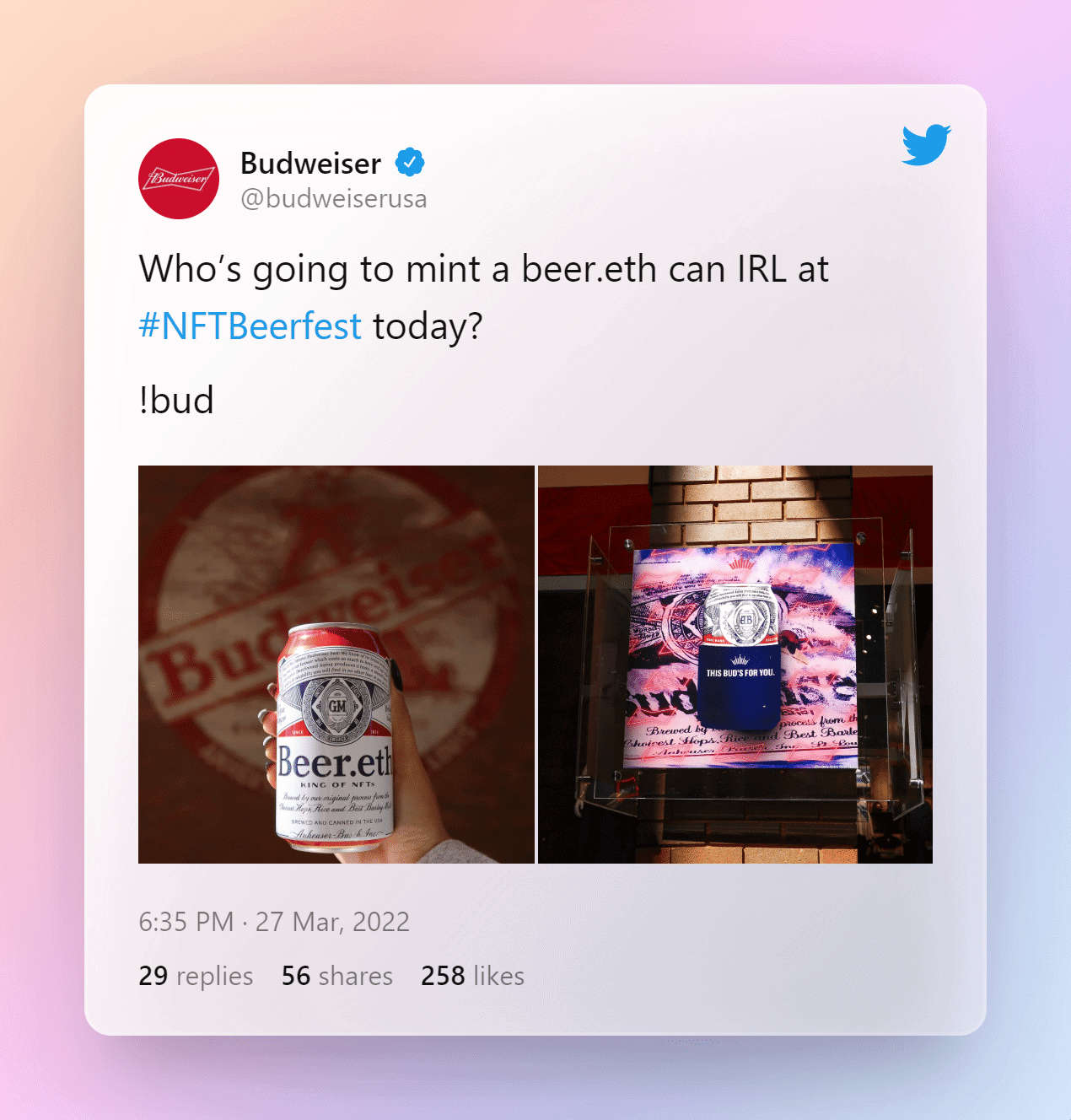
Beverage brands are also increasingly present in the world of NFTs and the cryptosphere. We can cite Dictador rum, rum Ron Carúpano, the Penfolds wine, the Patrón tequila , the Bacardi rum, the Hennessy cognac, the Glenfiddich whisky, Absolut vodka or Budweiser gets its first beer.eth domain name.
But what is this craze really all about? Why are NFTs so popular? Why are they also decried? What are NFT spirits, and what's behind them?
Non-fungible spirits
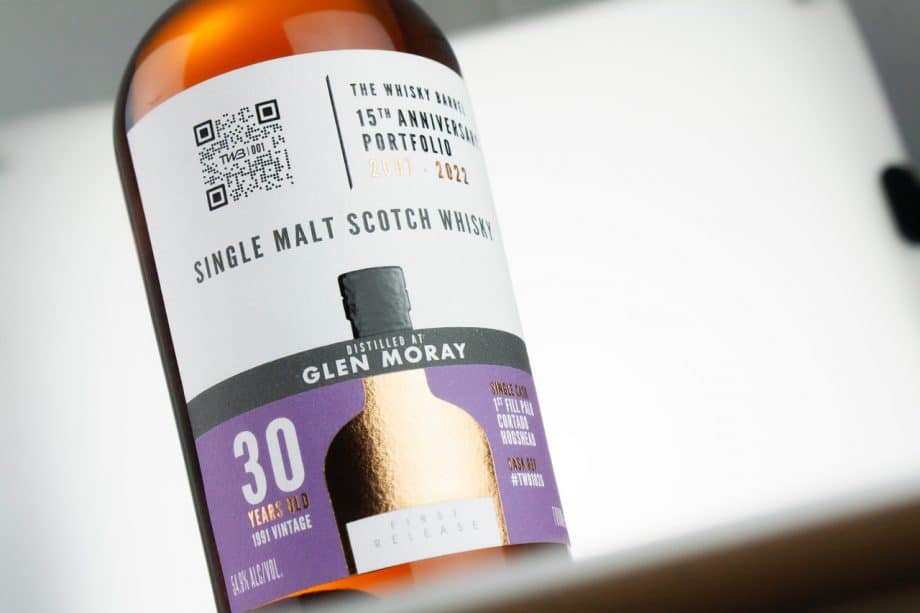
You've just received your bottle of ultra-premium, rare 30-year-old Scotch whisky. At last, you can touch this collector's item, hold it in your hands and caress it with your fingers. label texture. You bought it a few years ago, but it was stored in a cellar somewhere in the world. So this is your first physical contact with this bottle.
Despite this, other people like you have invested in their own bottle of the same whisky, but decided to leave it in storage. Indeed, by the time you had yours shipped, their bottles had become even rarer and more expensive. In this case, you could say that you've just acquired an NFT spirit (spirit sold as a non-fungible token).
If we could phone every potential customer and explain how NFT spirits work, there would be a lot more people on board.
Samuel Falic, co-founder of BlockBar
Samuel Falic, co-founder of BlockBar, The value proposition of an NFT spirit is so clear once you understand the process. If we could phone every potential customer and explain how NFT spirits work, there would be a lot more people on board.«
Since the launch of the NFT luxury wine and spirits digital platform in October 2021, the company has partnered with Glenfiddich, Dictador, Patron, The Dalmore and several other distilleries to launch NFTs. So far, the market has welcomed the concept: the price of Dictador's first NFT jumped from 25,000 $ to 36,000 $ on the market just hours after its launch.
To fully understand how these collaborations work, and why they become so remarkable, we need a little more explanation...
How does the NFT spirits transaction work?
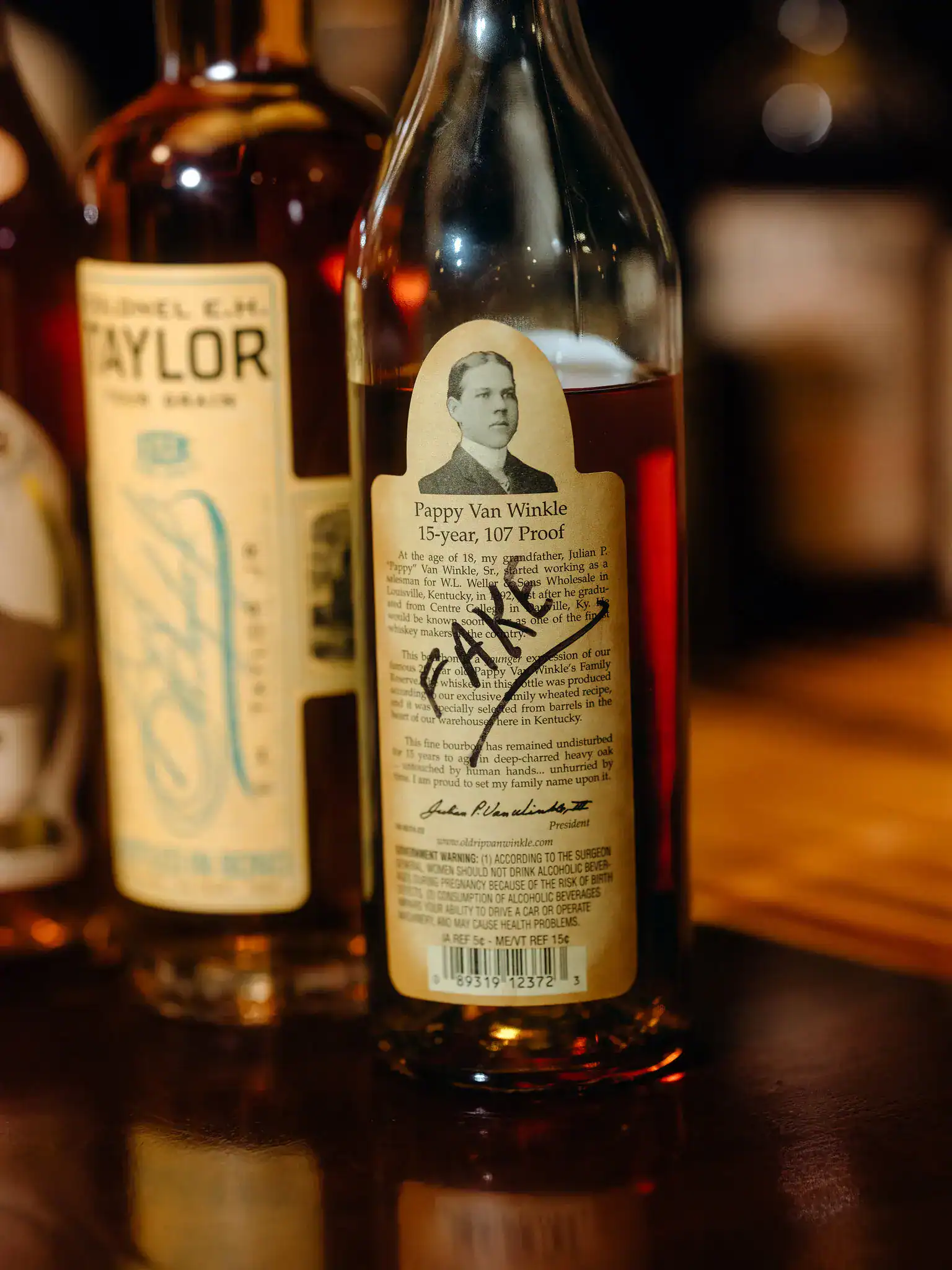
When you buy an NFT of a bottle of spirits, you're not just buying a digital image. You're buying the actual, physical bottle. Your new possession is not shipped directly to you at the end of the transaction. It's stored off-site by the NFT platform or by the distillery itself, which also reduces storage problems. The digital image generated simply acts as a authentication certificate which confirms that you have the rights to this bottle.
These rights come with different choices. You can :
- keep the bottle as a investment in a top-quality product.
- resell these rights to another investor.
- make the ‘radical’ decision to drink alcohol, an action known in NFT jargon as «burning off».
When you choose the latter option, the bottle is de-stocked and shipped to you. It is also removed from the NFT marketplace for good, and will never return. The platform behind the original transaction, which lists the bottle as a tradable asset for all to see, therefore removes the bottle from its website.
Burning this NFT spirit increases its scarcity and raises its value at a variable rate, determined by factors such as the spirit's brand and quality. Other investors will be informed of the burn when it takes place: the platform behind the initial transaction will list the bottle as a tradable asset, along with its owner, and remove it from the market once it has been burned.
When this happens, a win-win scenario sets in. The other owners of that same bottle win because the value of their investment has increased. You win because you can finally enjoy that unicorn bottle.
We see ourselves as an art house selling great spirits. The NFT 1976 vintage allows us to set up an expression of rum and art as a pioneering investment.
Ken Grier, Associate Creative Director, Dictador
Ultra-premium designs for NFT spirits
Any bottle can be turned into an NFT. Every day, you can see bottles for sale on platforms such as OpenSea.
In the luxury sector, however, NFTs are unique or rare expressions. They are generally associated with unique emotional experiences that go beyond the bottle (invitation to visit the distillery, exclusive dinner with the distiller, etc.).
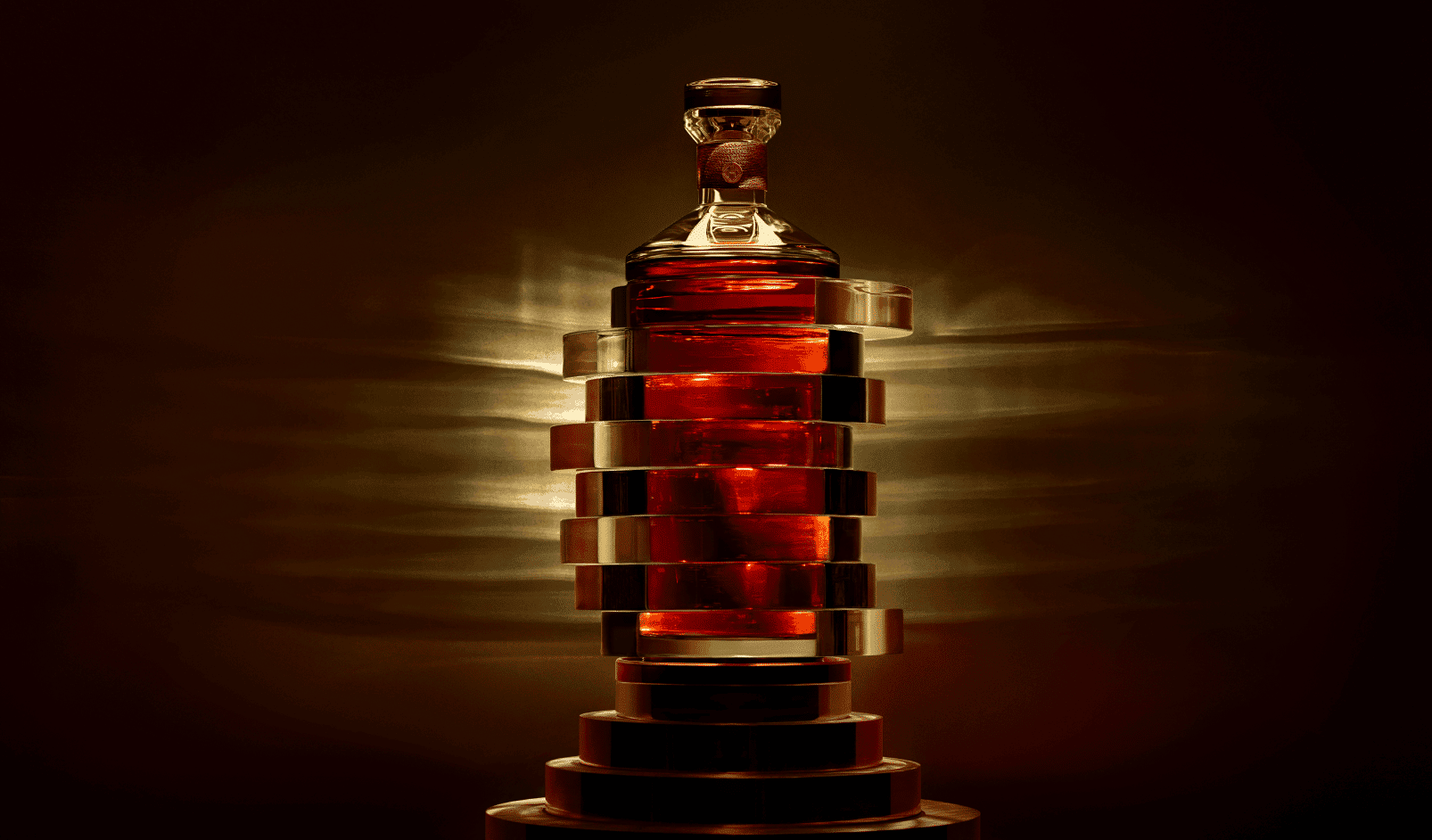
The products are often visually impressive: Hennessy entered the market with a two-bottle set featuring a blend of eaux-de-vie from the cognac house's seven previous master distillers, encased in a designer box that opens with a Jade key.
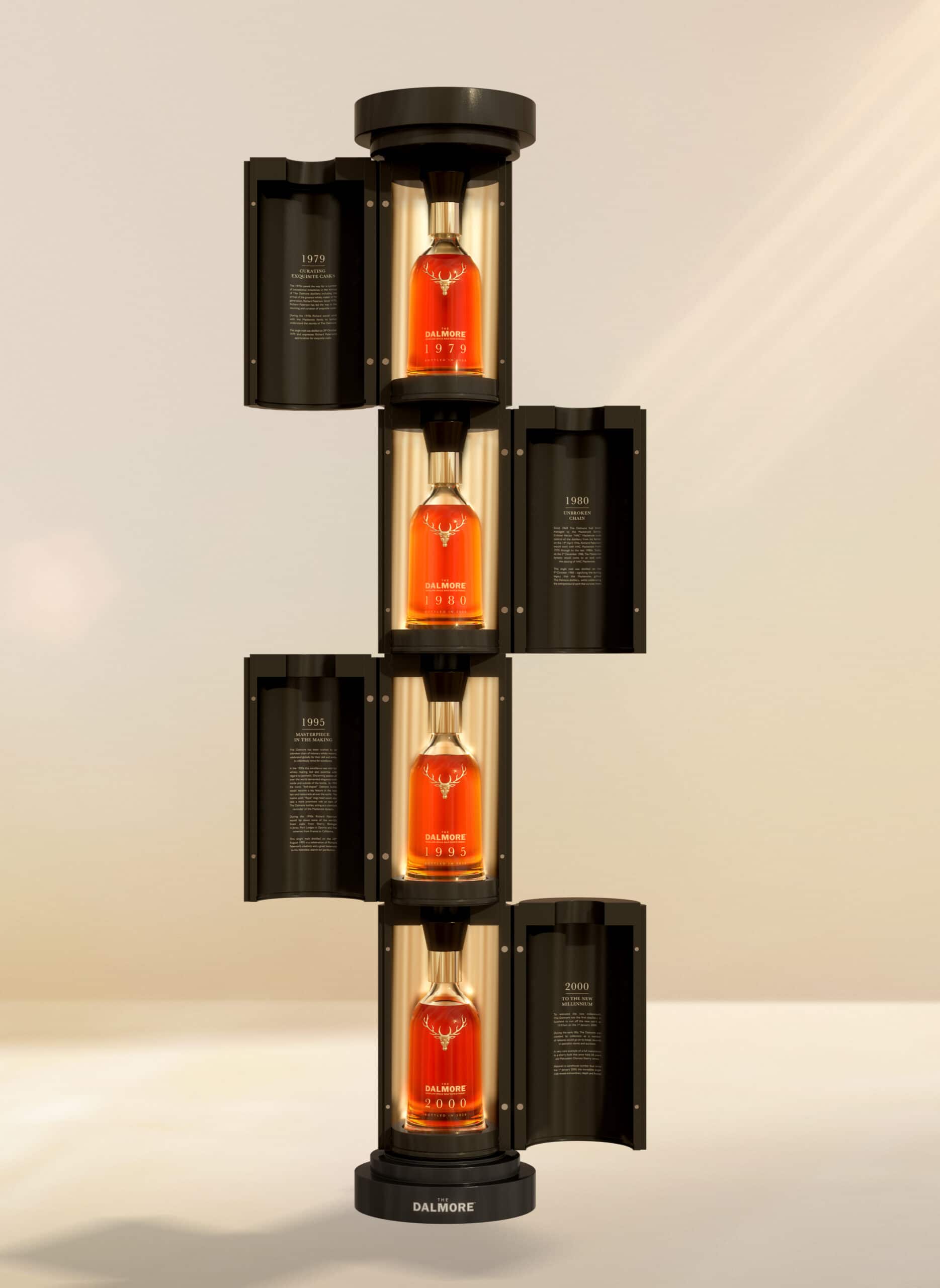
The Dalmore house has proposed a quartet of single-malt scotches spanning four decades. The bottles are enclosed in a custom-built tower.
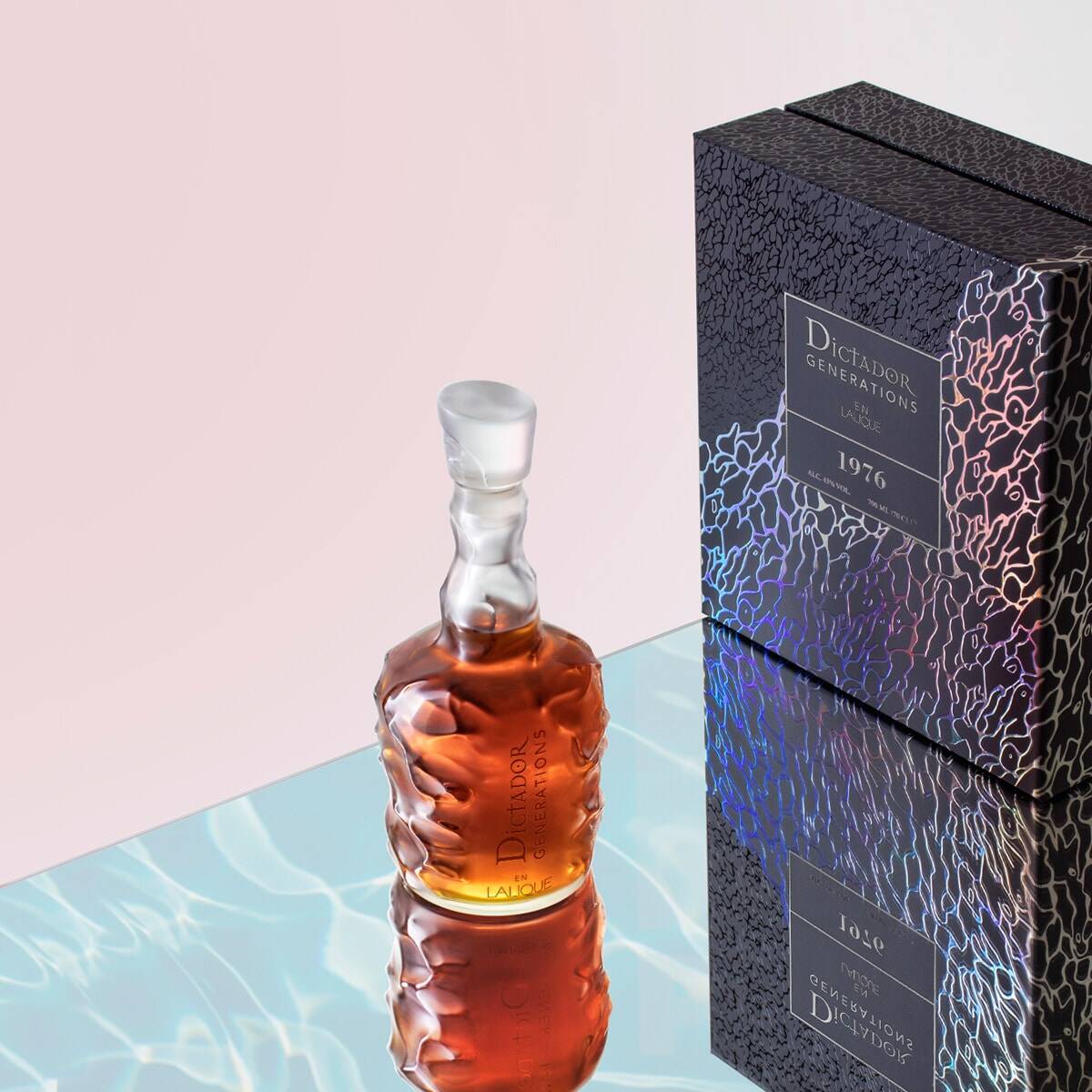
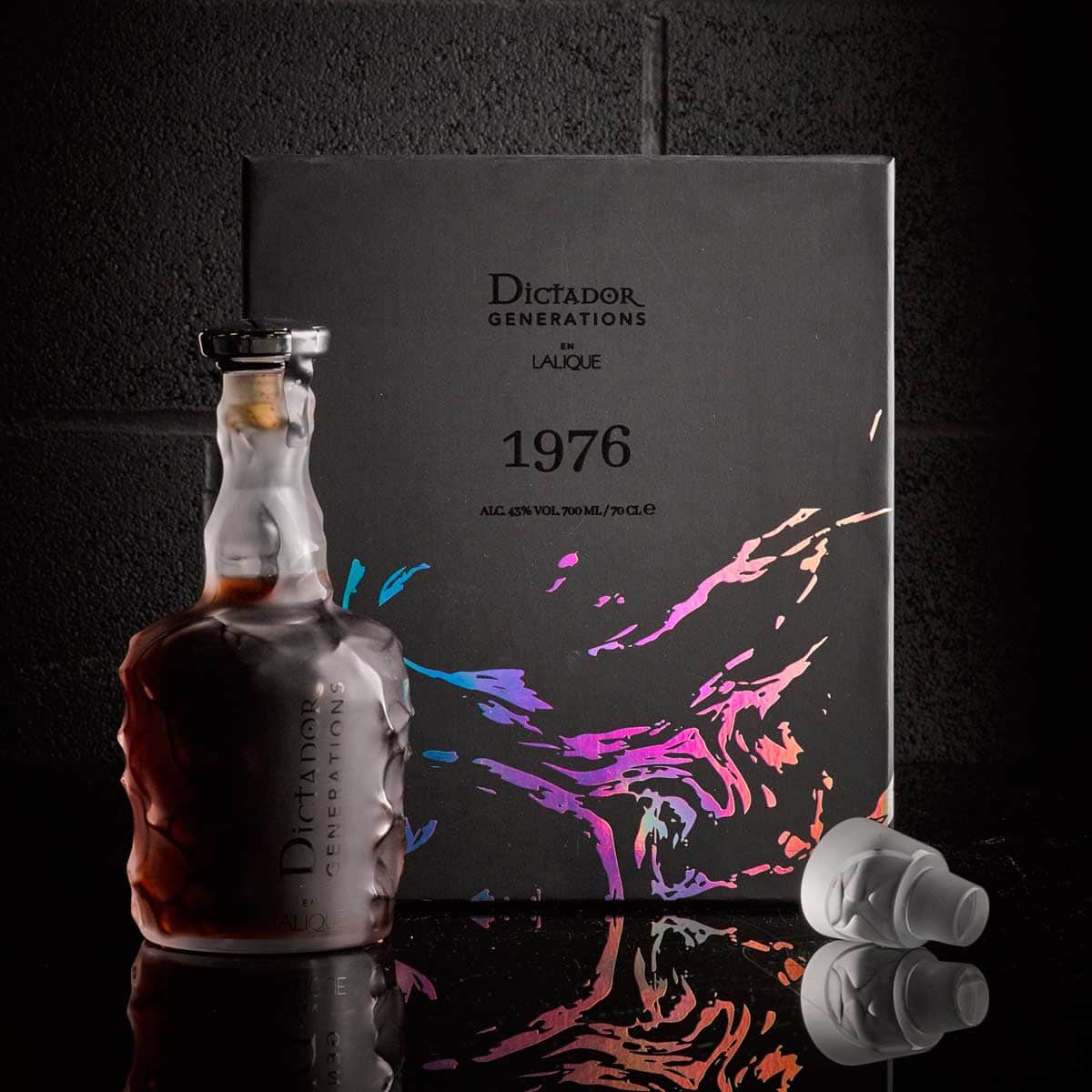
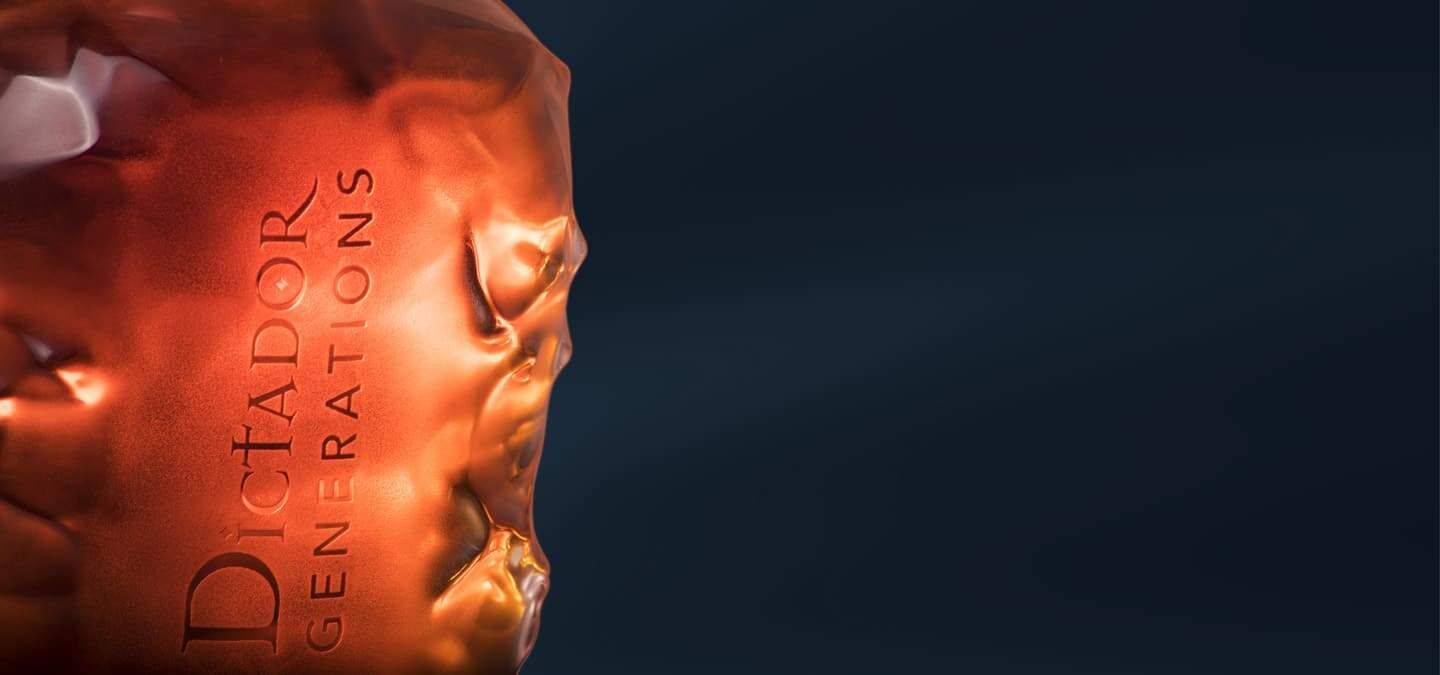
For its first foray into NFT, Dictador presented a blend of 1976 vintage rums in a crystal decanter. designed by Lalique.
Beyond liquid
The packaging design associated with these rare spirits allows distilleries to fully exploit their creativity and goes beyond the liquid. It's an essential step for some producers. «We see ourselves as an art house selling great spirits,» says Ken Grier, Associate Creative Director at Dictador. «The 1976 vintage NFT allows us to set up an expression of rum and art as a pioneering investment.»
This blend of spirits and art makes even more sense in a wider context. Art is the main fuel fuelling the NFT phenomenon. This market has reached 41 billion worldwide in 2021, This figure is on a par with the traditional art market. Prestigious auction houses known for selling luxury wines and spirits, such as Sotheby's and Christie's, have entered the NFT game.
«There's an active audience of art and scotch whiskey enthusiasts in the NFT space,» explains Claire Clark, global brand communications manager for The Dalmore. «We have a presence in the art sector through our partnership with Scotland's premier design museum, the V&A Dundee, So it seemed like a good place to explore.»

But who buys NFT spirits?
The typical NFT consumer
Today's typical NFT consumer is not very far removed from the image of the « crypto bro »It's the kind of business many people can only imagine. According to BlockBar's Samuel Falic, 86 % of the company's customers are between the ages of 25 and 34. They are predominantly male and from the United States.
These consumers also tend to be tech-savvy and invest large sums of money in cryptocurrencies. In some cases, a huge investment is required, because while most high-end bottles cost a few thousand dollars right out of the box, others fetch significantly more.
Hennessy's multigenerational cognac, for example, reached BlockBar's NFT space at $226,000. According to Dov Falic, these prices are determined by perceived market value, not by the platform. «NFTs on our platform are sold at the suggested retail price,» he explains. «The amount comes directly from the brand owners».
A desire to reduce speculation?
The Falics also see their clientele as a mix of collectors and investors.
Buying an NFT spirit allows investors to lock in the changing values of cryptocurrencies when the notorious volatility of the digital currency turns in their favor. This transaction steers assets away from the spectacular, speculation-laden market movements of crypto-currencies and towards a sector defined by reliable, steady growth, much like the secondary market for premium and rare wines.
In the world of NFT spirits, however, «reliability» and «consistency» are not necessarily synonymous with slowness and regularity. For example, we have seen rapid price peaks, with an increase of 44 % for Lalique/Dictador bottles.
Ken Grier points out that the central element of the concept - investing in stability within the context of a speculative market - is not really new. «During the gold rush, most of the money was made selling picks and shovels,» he explains. «Gold offered a lot of speculative opportunities, but picks and shovels were real-world assets. With an NFT, the bottles act like that type of asset.»
NFT marketing at breweries and distilleries
NFTs for collectors
As NFTs are associated with this phenomenon of scarcity, their use will have an impact on the super-premium market, i.e. for prestige wines and spirits. For example, there are companies that enable the online purchase of all or part of one of these luxury products.
«For brand owners selling NFTs, the bottles can remain stored in a cellar in perfect conditions and are only shipped to the buyer at their request,» explains Guy Wolfe, analyst at IWSR. «This makes resale much easier, as the rights to the bottle can be assigned while the actual product remains where it is - useful for high-value items that require special storage conditions.»
In other cases, NFTs are published for products that have not even been manufactured yet. Associated with particular harvests, or even individual plants and crops to be harvested on a given date, numerous beverage brands market their NFTs on the basis of speculative increases in the value of these products as anticipation of their launch increases.
In some cases, brands are able to pre-sell an NFT for a future harvest, thus generating revenue for a product that is still maturing.
10 years ago, they were called pre-sales! The idea of a rare digital collection is still very interesting for prestigious brands, but the speculative side of things raises questions about the potentially harmful aspects of this type of practice. We'll come back to this later in the article.
When it comes to alcohol, NFTs so far seem to fall into two broad categories: a different way of selling physical bottles, and a way of selling something intangible, for example, Budweiser's NFTs on historic can designs.
Guy Wolfe, Strategic Insights Manager, IWSR
NFT marketplaces
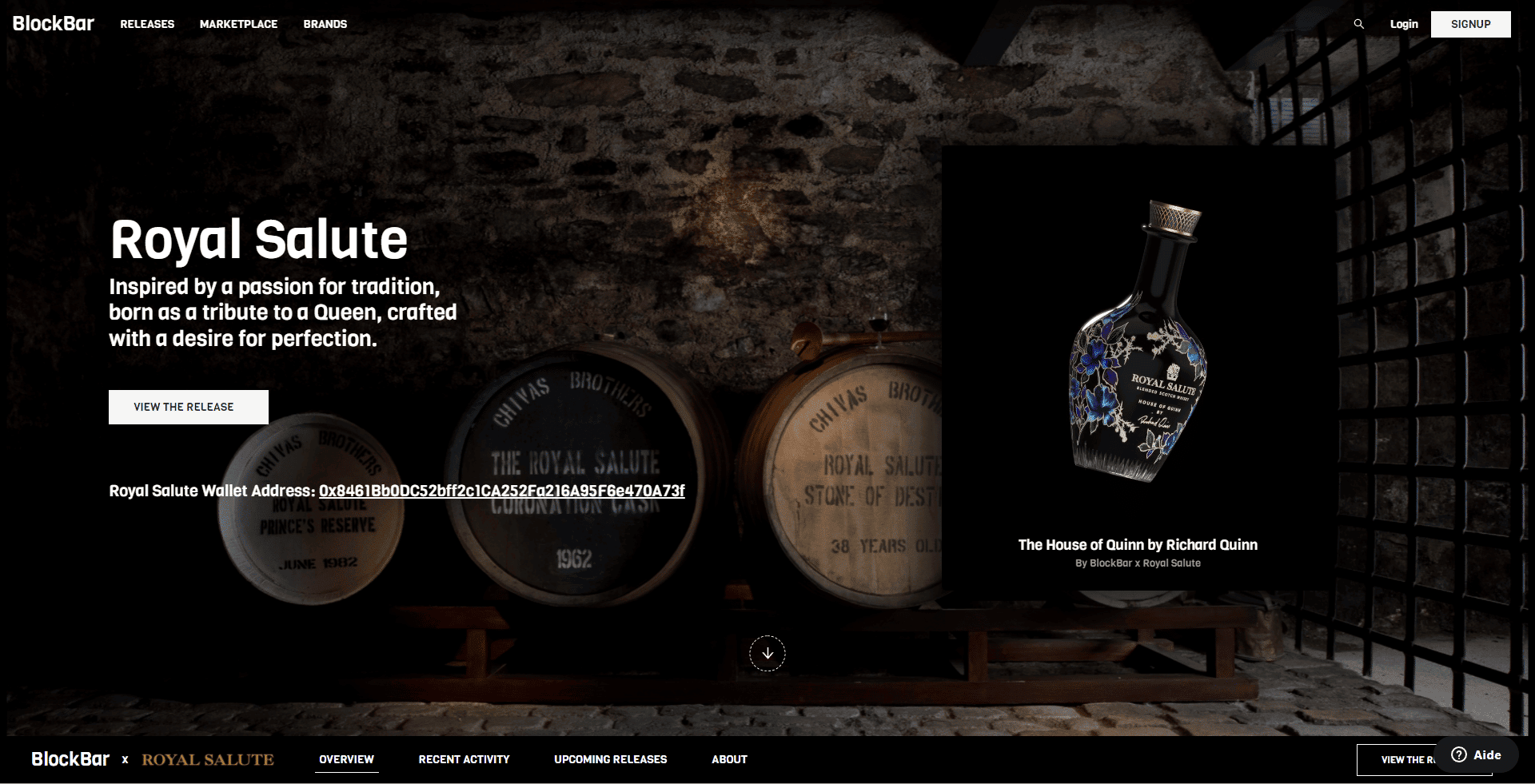
Marketplaces dedicated to NFTs and alcohol, such as BlockBar, have begun to appear. These specialized sites facilitate the investment and exchange of NFTs for consumers interested in limited collection bottles or rare spirits. For brand owners, NFTs marketplaces can provide additional support in terms of digital marketing, Like traditional e-commerce sites, giants such as Amazon or Vivino, or wine merchants and distributors such as Dugas Club Expert.
So using NFTs as a way of selling something intangible has given brands a new way of resonating with consumers. In some cases, brand owners are using NFTs as part of product launch campaigns.
New advertising campaigns for breweries
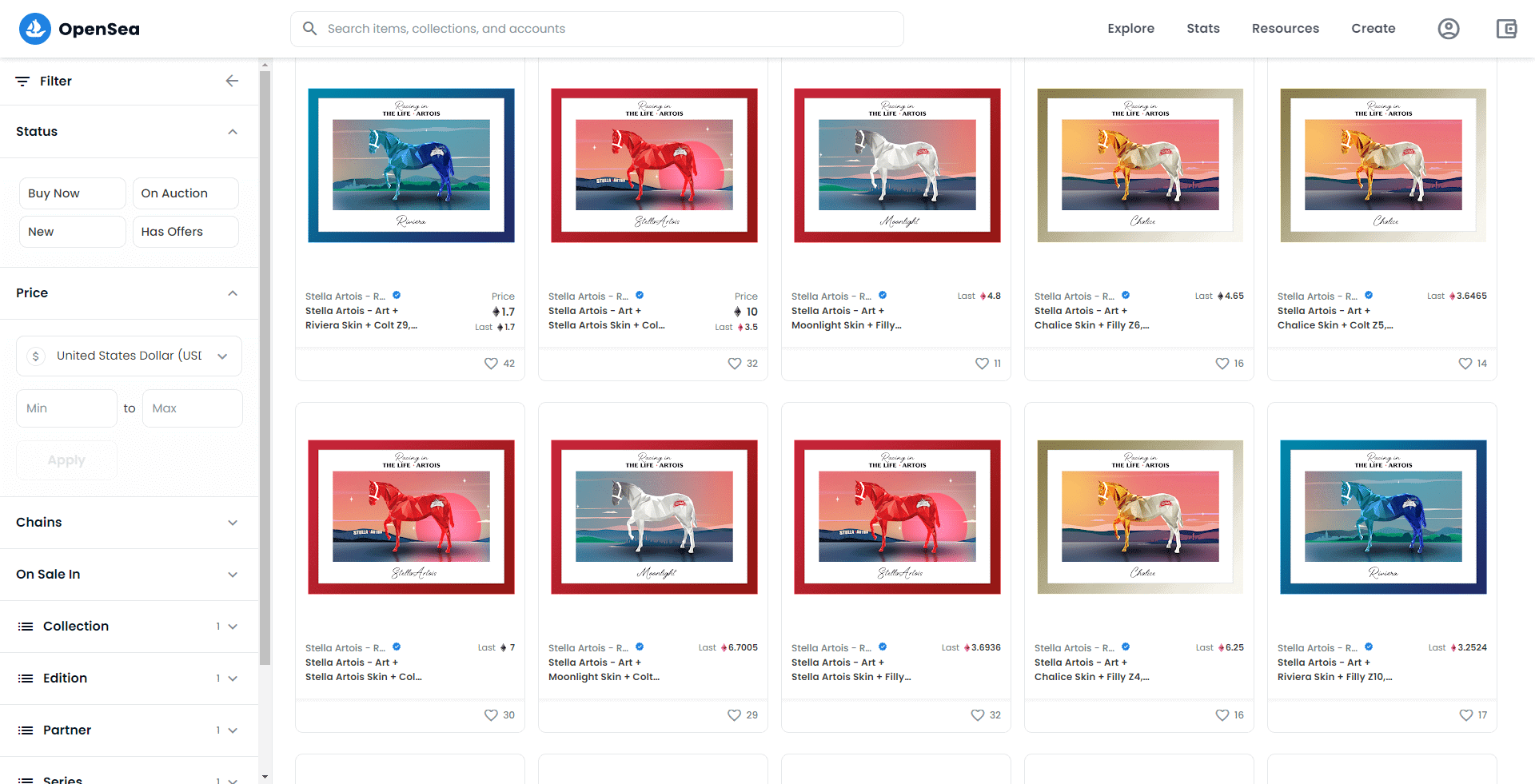
Stella Artois, for example, was one of the first beverage brands to adopt NFTs. It partnered with virtual horse racing game Zed Run in July 2021 to create its NFT campaign « Racing in the Life Artois ».
As part of the campaign to celebrate the beer's long history with horse racing, the brand created 50 auction items in the form of NFTs. Each contained a Stella Artois artwork, a Genesis racehorse NFT and a Stella Artois First Edition skin. The NFT racehorse is equivalent to owning a digital racehorse, which can be used on the Stella Artois website. Zed Run.
These items could be the subject of multiple bids, with payment made via the Ethereum cryptocurrency. To mark the occasion, Zed Run created a 3D Stella Artois racetrack inspired by The Life Artois.
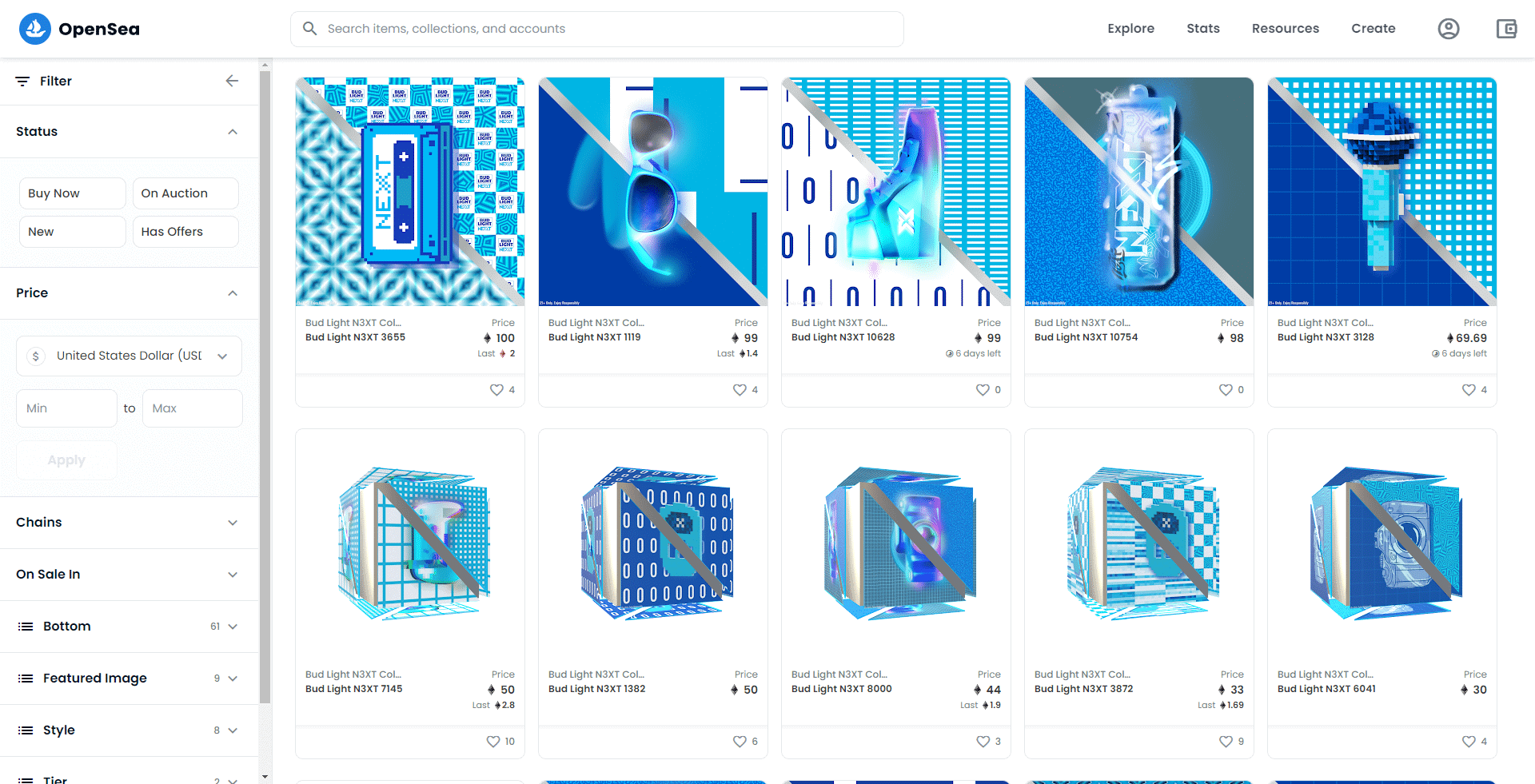
AB InBev commemorated the launch of its new light beer Bud Light Next with the release of an NFT called Bud Light N3XT Collections. This collection includes 12,722 unique tokens, each randomly numbered and using the colors of the pack, aiming to celebrate dixit «the hobbies of today's 21+ consumers».
Where we at Studio Blackthorns are more skeptical is on their obscure claim in their FAQ on the question of ecology. On their site, it says: «What are you doing about the environmental impact of your NFT collection? We have partnered with a carbon footprint tracking company to track our carbon impact, with a goal to be 100% climate neutral for all NFT projects launched in 2022 and going forward.
We would like more transparency about the partner in question and clarification about what it really means to be «100% climate neutral». ( aka Greenwashing).
Metaverse and Web3
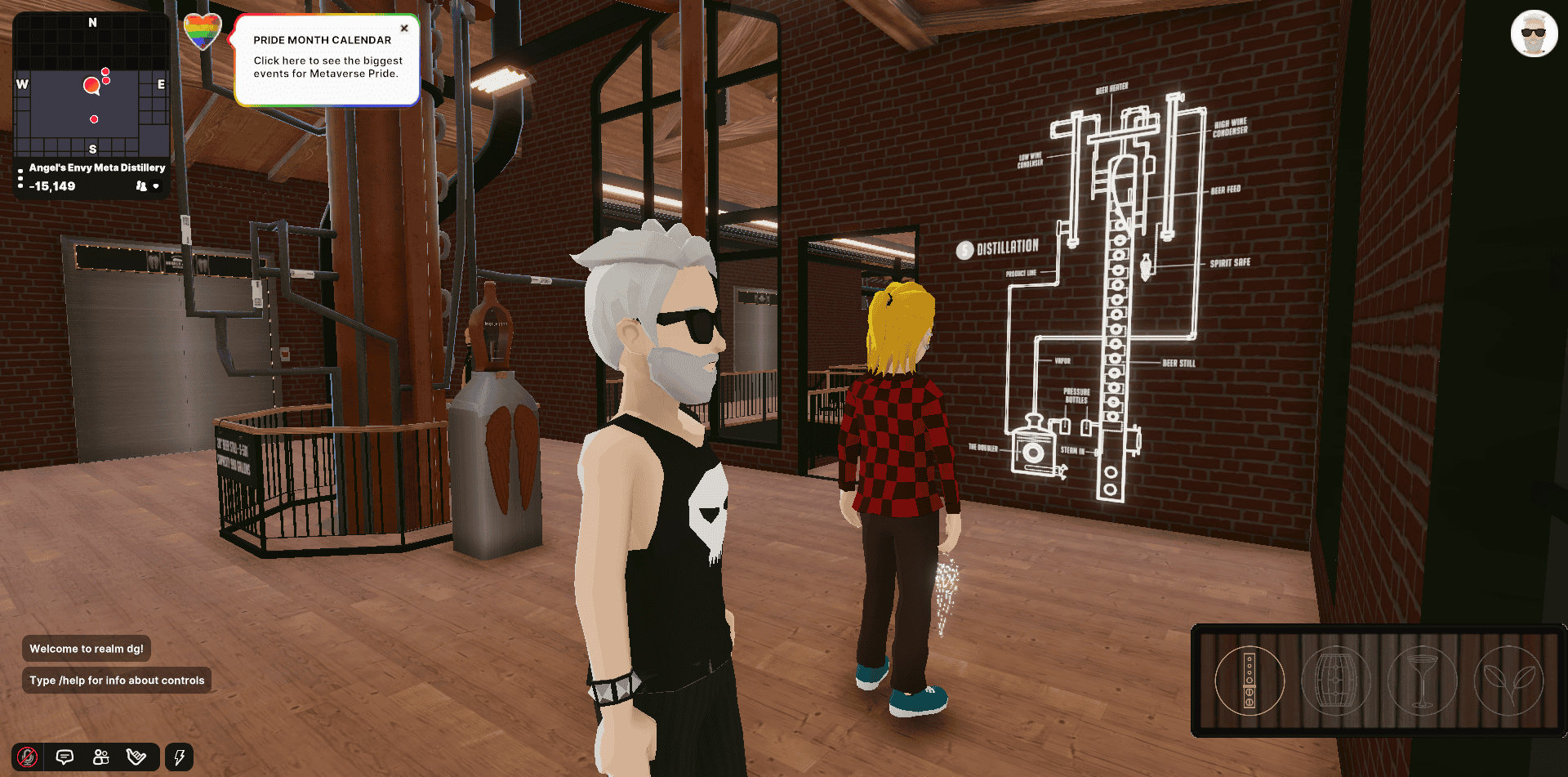
Interestingly, some brands also launch NFTs alongside real-world rewards, such as exclusive bottlings and meetings with manufacturers.
The use cases for NFTs are multiplying, and these digital assets are introducing more and more consumers to a new era in the digital world: that of Web3 (the decentralized Web) and the metaverse. Although still in the early stages of development, brands are using the metaverse to experiment with new ways of resonating with the most geeky or gaming-minded consumers.
At Studio Blackthorns, we're big fans of retrogaming, from Mario Kart on Super Nintendo to FF7 Remake on PlayStation 4, but what about the typical consumer? This complex, metaversed virtual world is tending to become a «new normal» according to the wishes of certain tech CEOs, and we're naturally keeping an active watch on the subject.
However, we're still wondering how all this might play out in the near future. Is there any real analysis of the market and consumers? Or do these beverage giants simply have too much money to spend on these new technologies? One thing's for sure, if you're a fan of a kind of SIMS 3.0, Second Life or Minecraft, then this New World is for you!
The Miller Lite Metaverse Bar
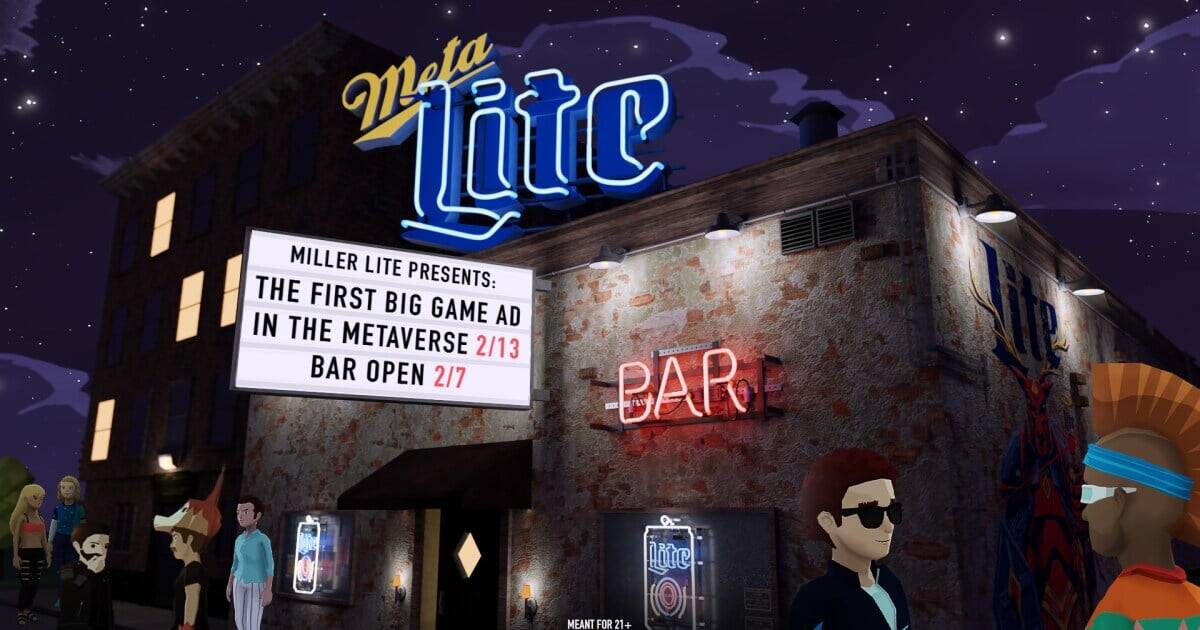
Returning to beverages and breweries in particular, Miller Lite launched a metaverse-based bar for Super Bowl 2022. Visitors to the Miller Lite Metaverse Bar had exclusive access to the brand for Super Bowl 2022, which was not broadcast during the televised game. Other visitor benefits included rewards for selected virtual customers and other ways to engage.
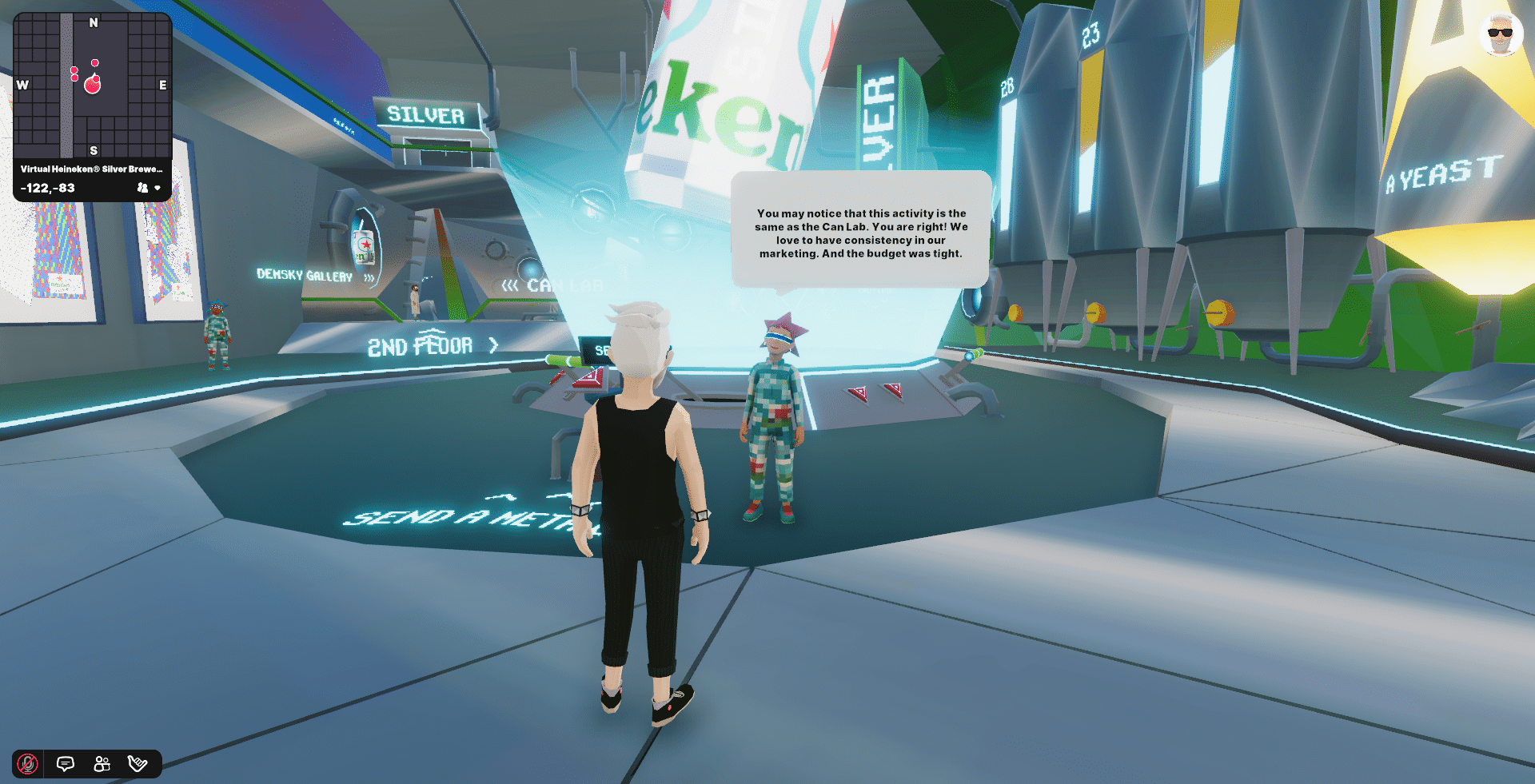
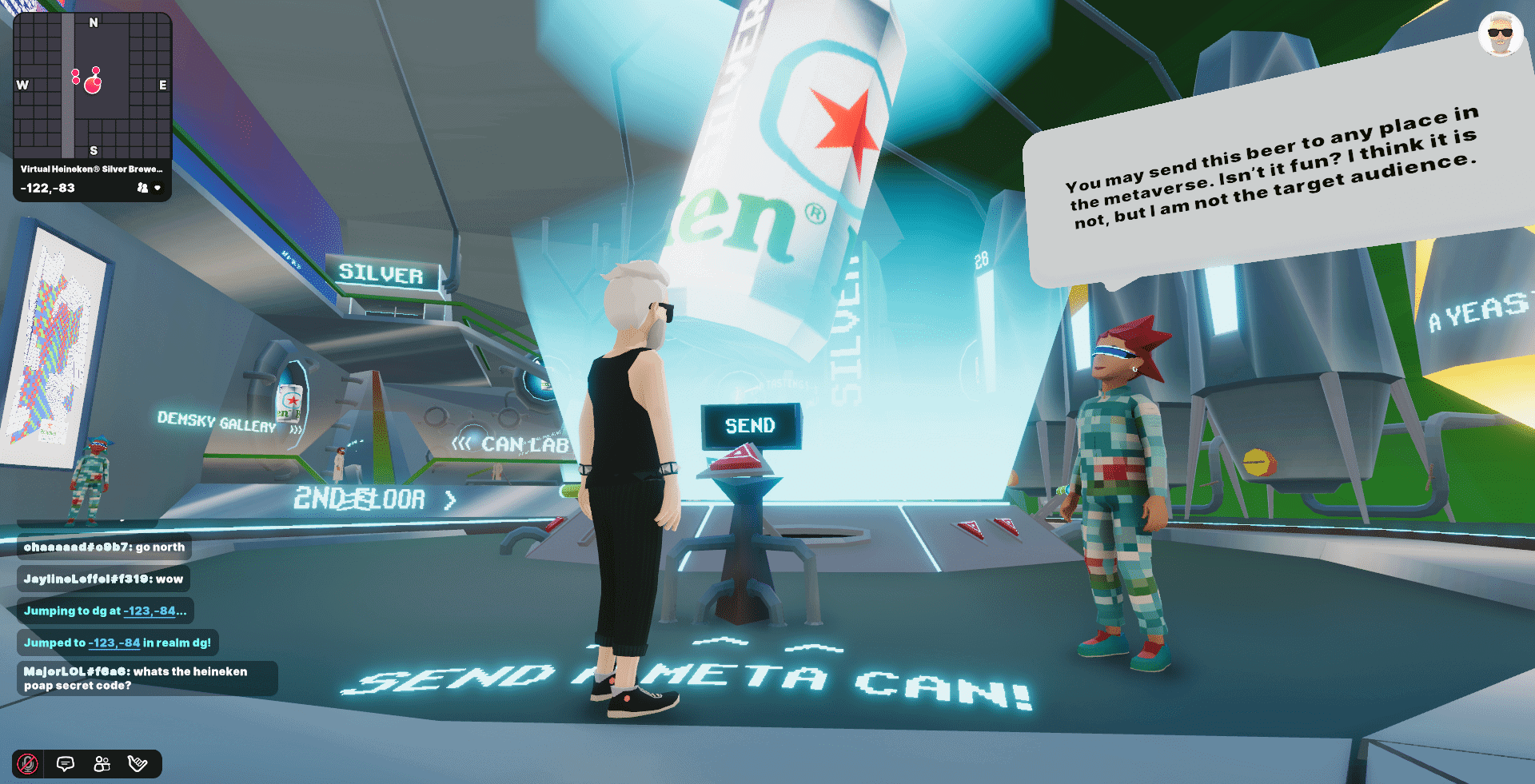
Heineken Silver, the world's first virtual beer
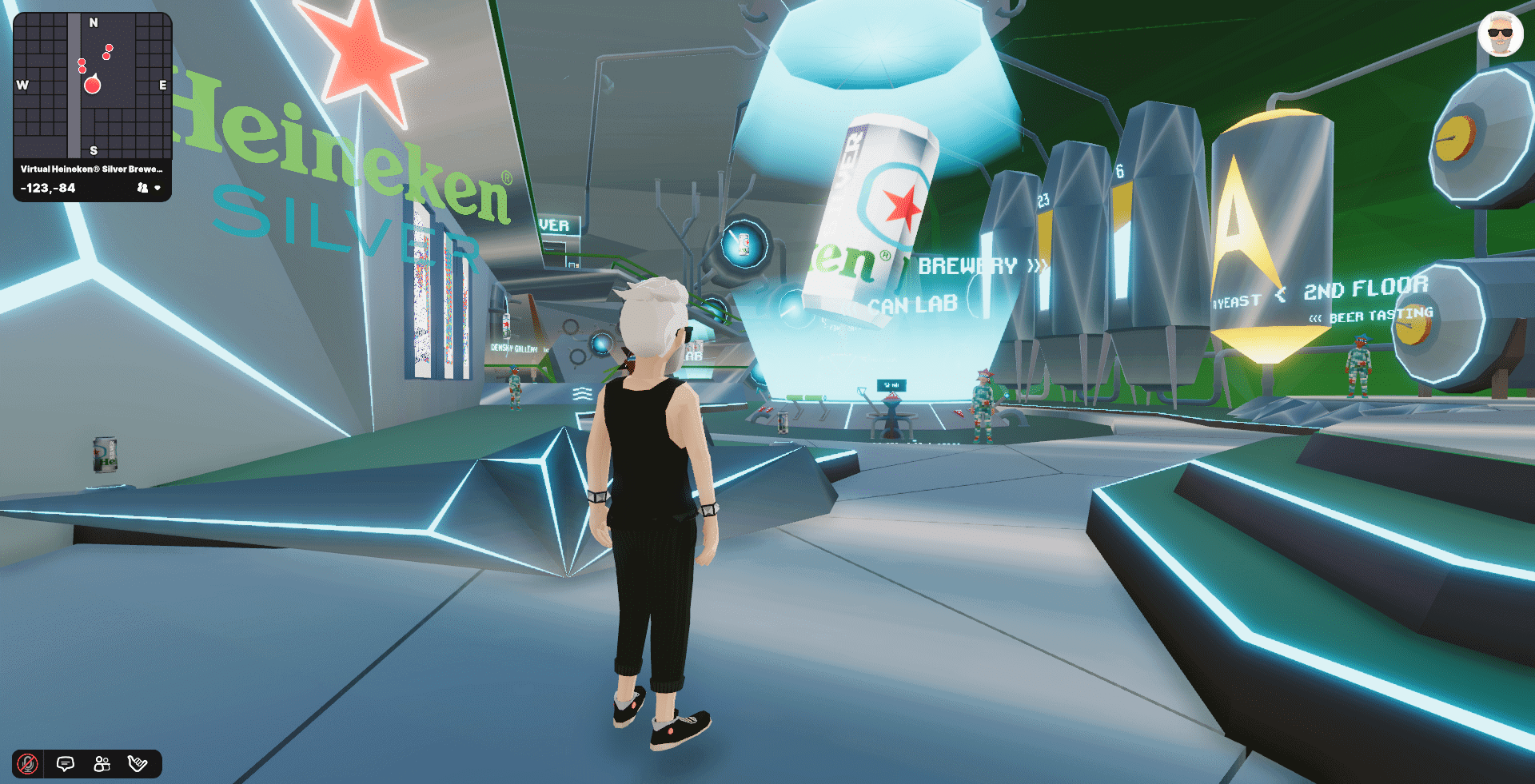
In March 2022, Heineken launched its very first virtual beer, Heineken® Silver, available exclusively in its virtual brewery within the immersive digital platform Decentraland.
Heineken's vision is to consolidate its «decades of brewing innovation» in order to apply them in a digital transformation. In their press release, Heineken plays with words and delivers an editorial with an ultra-digitized lexical field: «the finest 100% computer-generated ingredients», «special A-Pixels yeast», «brewed with binary-coded hops», «grown by NPC farmers» (non-player character), «virtual brewing supervised by Heineken's virtual brewing assistants», and so on.
We know that the metaverse brings people together in a light, immersive way - which is really exciting - but it's just not the best place to taste a new beer. Our new virtual beer, Heineken Silver, is an ironic joke.
Bram Westenbrink, Global Head Heineken® Brand
These elements have come together to develop a totally unique beer that visitors to Heineken's virtual brewery will be able to see in the virtual world of Decentraland. The virtual beer was unveiled at a product launch event in Heineken's virtual brewery, where guests were able to discover how the beer is made in seconds, while sampling pixelated lobster and caviar and rubbing shoulders with Heineken ambassadors including Thierry Henry.
Bram Westenbrink, Global Head Heineken Brand, said, «At Heineken, we believe that connecting with people is vital to human existence, like the air we breathe or the water we drink, and we know that the metaverse brings people together in a light, immersive way, which is really exciting - but it's just not the best place to taste a new beer.»
«Our new virtual beer, Heineken Silver, is an ironic joke. It's a conscious idea that pokes fun at us and many other brands that are getting into the metaverse with products that are better appreciated in the real world. Right now, you can't taste pixels and bytes. So we want to make a joke about it and remind everyone that nothing beats the taste of a refreshing beer, including our new virtual Heineken Silver, in the real world.»
There's no doubt that this playful, light-hearted approach, coupled with self-mockery, will make people smile. But we're still curious to see how the brewing world will react to this kind of staging.

Entering the New World
Democratizing the high-end spirits industry
When the Falics launched BlockBar, they saw the concept as a progressive step into the fascinating and sometimes non-conformist world of high-end spirits collecting. It wasn't a blind guess: Dov's father founded Duty Free Americas, a company known for luring collectors with large amounts of cash into airports around the world to unearth elusive bottles. Being immersed in the duty free environment allowed the Falics to note the system challenges they felt could be overcome in the NFT space.
«The difference between an NFT and an auction house or duty-free store is access,» explains Dov Falic. «In these traditional markets, you have to be in the right place at the right time to get a rare or exclusive bottle. Since NFTs are offered online, you don't really have that problem. For this reason, we see NFTs as a way of democratizing the high-end spirits industry.»
While direct partnerships with distilleries and the security of digital authentication considerably reduce the risk of fraud, fears of inauthenticity are always present, and the overwhelming presence of men in the market can seem rather burdensome.
Rarity, but at what price?
Many people dismiss all forms of NFT, but there's hope that a better understanding of how spirits operate in the NFT space could eventually lead to a wider market. «As NFTs grow, we see a great opportunity to target beyond our current demographic,» says Sam Falic. «We also want to be a bridge between generations. We want to bring more young people into high-end spirits, and we want to teach older people how NFTs work.»
That said, this digital phenomenon remains controversial for some experts from both an ecological and sociological point of view. Once again, pro-NFTs will see unfounded threats, but on the environmental side, experts are up in arms, describing NFTs as an ecological absurdity.
Let's take a look at some important perspectives before you dive headlong into your NFT beverage, beer, wine or spirits. If, like us, your core corporate values are based on the respect for the environment, the chances are that this is as far as you'll go in your attempts at marketing renewal. As long as blockchains pollute and NFT-friendly companies remain opaque about their numbers and their carbon footprint, we think it wiser to abstain.
It's a continuous waste that creates little permanent value and becomes less and less efficient and more and more costly over time. The opposite is true of most technological innovations.
Seth Godin, American entrepreneur, author and speaker
NFTs, a dangerous trap
Socially speaking
Some leading thinkers, such as the famous American entrepreneur Seth Godin, are announcing NFTs as a dangerous trap. «Like most traps, they're mysterious, then attractive, then it's too late. An NFT is a digital treasure chest, a status symbol and an object of apparent value. Like a Pokémon card, an original Picasso drawing or an actual image from a 1955 Disney animated film, NFTs are designed to be the one and only items in the non-fungible reality in a world gone digital.» The author and speaker denounces a social trap and suggests that NFTs will become more like Kindle books and YouTube videos in the future.
According to Seth Godin, the trap is this:
Creators can easily become addicted to their creations. This windfall is mainly due to the fact that creators can receive royalties every time their work is resold or transferred.
Buyers, with a sunk cost, get hooked on the idea of driving up prices, and can't get away from it.
Creators and buyers are then caught in a vicious circle, and we pay all the costs associated with an unregulated system that consumes colossal amounts of precious energy for the sole purpose of creating rare digital tokens and trading them.
Seth Godin adds that «it's a continuous waste that creates little permanent value and becomes less and less efficient and more and more expensive over time. The opposite is true of most technological innovations.»
Environmental problems associated with NFTs
The main cryptocurrencies, notably Bitcoin and Ethereum (with which NFTs are exchanged), use a protocol to determine their value, called «proof of work» (PoW).
To make an NFT, it must be registered (or «minted») on the blockchain. The Ethereum network supports around 14 transactions per second; beyond that, miners engage in a bidding war to obtain these transactions. Hitting an NFT does not prevent the associated file, image, album or GIF from being duplicated or circulated, but it does mean that, under this smart contract, a copy is not «the original», because it is not held by the owner. What digital files and digital artists have is duplicability.
Ownership of the artwork is authenticated by mathematical puzzles so complex that the calculations require entire warehouses of computers. Companies that solve these puzzles are rewarded with new tokens, and their solutions add a «block» to the authentication chain.
These calculations consume large amounts of energy, often produced by coal-fired power plants. Most NFTs are exchanged on the Ethereum blockchain, although it is now possible to use the Polygon protocol (notably on OpenSea), providing a relatively low or even zero gas fee.
Although the Polygon website While the low cost of gasoline and the speed and security of calculations are communicated, the question of the environment remains unclear. According to some sources, this protocol is based on Proof of Stake (PoS), which is apparently less resource-intensive.
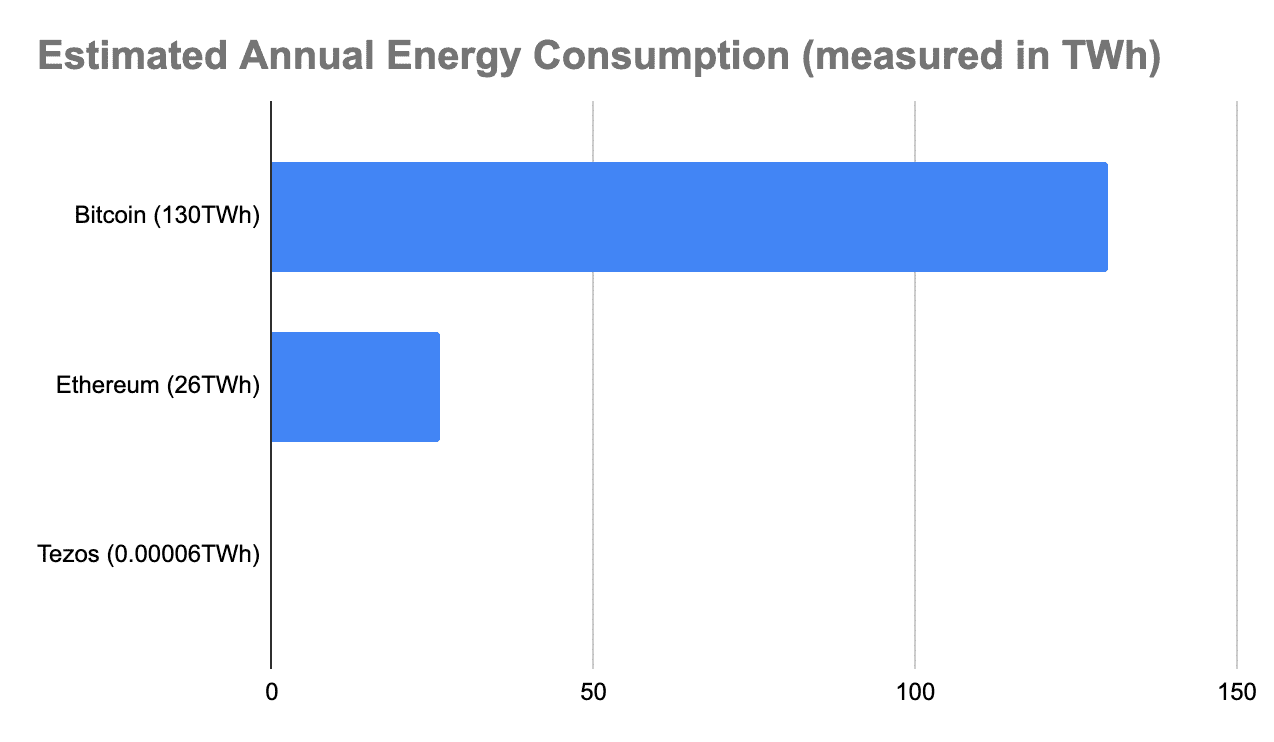
For the record, technology watchdog Digiconomist estimates that Ethereum uses as much electricity as the whole of the Netherlands, with a carbon footprint comparable to that of Singapore.
One solution would be to bypass Ethereum and place its works and NFTs on a platform called Cardano, using a different authentication system. Rather than solving ever more difficult - and therefore ever more power-hungry - puzzles, companies can simply give away the tokens they already possess.
Our experience and opinion of NFTs
Like many specialized communications agencies, Studio Blackthorns is always on the lookout for the latest technological, marketing and communication trends. The democratization of blockchain technology, cryptocurrencies and the arrival of NFTs has therefore not escaped our attention.
Curious by nature, we investigated these new products to weigh up the pros and cons, so as to better serve our customers.
Crypto domain names
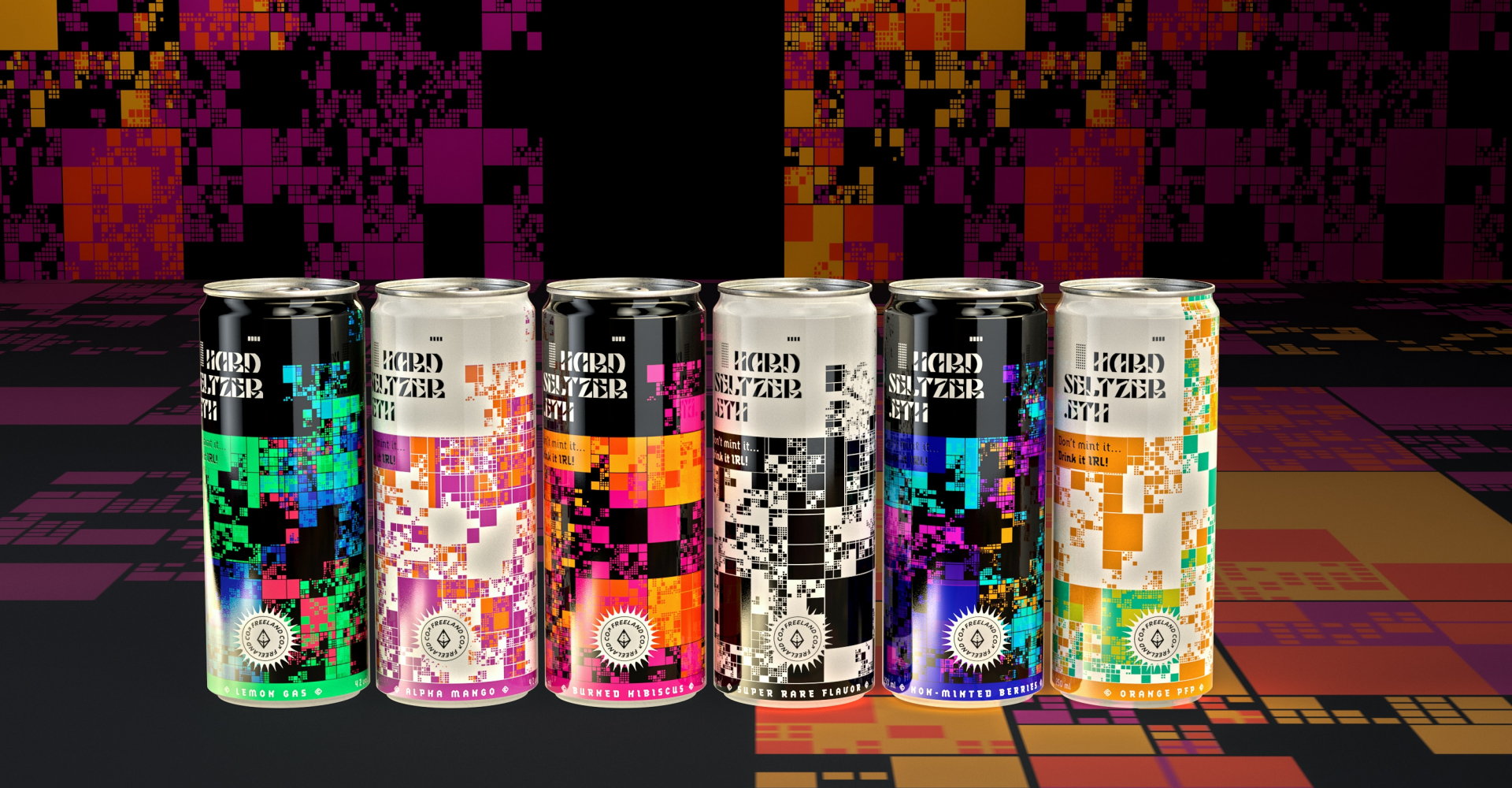
As a small lab, we did a lot of trial and error. The main idea, moreover, was to buy a few crypto domain names that might come in handy one day. After the thousands of dollars spent by Budweiser on its beer.eth domain name, anything seemed possible! So we tried to own the domain names hardseltzer.eth and rarewine.eth with the sole aim of reselling them one day, if the craze catches on.
At the time, we weren't fully aware of the amount of energy consumed to purchase a crypto domain name on the Ethereum blockchain. So we used a calculator to gauge and quantify this data.
According to the online calculator carbon.fyi, the purchase of these 2 domain names combined required the emission of 112 x 2 kg of CO₂, i.e. 224 kg of CO₂ in total. Using this CO₂ converter to find a real equivalence, we arrive at 1204 km by plane, or about 3 Lyon-Paris journeys. That's too much!
The NFT can collection
At the same time, we wanted to produce a collection of 366 NFT cans in order to digitize our 2020 challenge.
This in-house challenge lent itself perfectly to a collection of rare items numbered from 001 to 366, with certain designed cans in video format. We had published a 1st item on Opensea, but it had not yet been «minted». Indeed, in order to transform it into a real, minted, saleable and transferable NFT, a one-off cost of between €200 and €300 in gas charges was required.
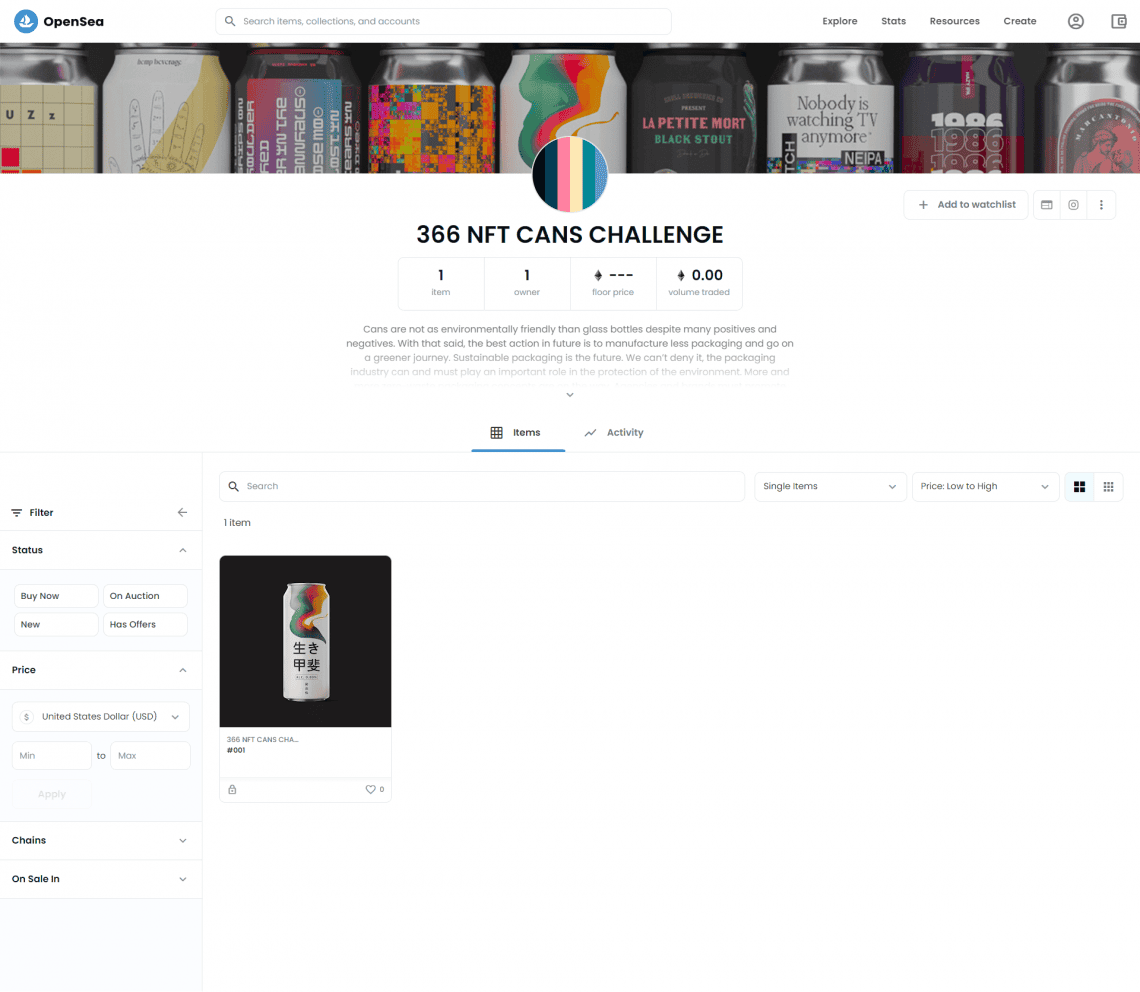
The idea behind buying one of these cans wasn't yet fixed, but we had lots of them. For example, giving a buyer the opportunity to use this design for their own products. Or associating this item with others. studio goods and services. Or give a percentage back to 1% for the Planet or other charities.
In view of the growing awareness of environmental impact, we have decided to suspend all activity related to this technology until the protocols are clearly proven to be carbon-neutral. Indeed, what an absurd idea to create polluting NFTs in order to recover money donated to an environmental cause!!! 🤪
In the end, we're back to square one, but more informed than before. We have no desire to speculate on a market or a product, and even less on creativity or art when it supports an economy linked to profit and greenwashing.
Our conclusion on NFTs in 2023
A differentiation opportunity for brands
As e-commerce becomes an increasingly important part of a beverage brand's distribution strategy, they are becoming more apt to experiment and invest in online spaces. NFTs and the metaverse, while still highly experimental and surrounded by changing regulations, are an extension of this.
If exploited effectively and ethically, they could enable certain brands to introduce new sales methods to the market, as well as new ways of interacting with consumers.
Warnings against unbridled speculation and ecological impact
According to Studio Blackthorns, the NFT market reinforces the idea of the «art fair» or «high-end gallery», which have always been linked to investment, speculation and resale. As far as we're concerned, this is a first ethical obstacle, because we want above all to support our customers in producing beverages with gustatory, aesthetic, conceptual and emotional qualities.
On the other hand, we have a digital market that is intrinsically associated with astronomical energy consumption. This is a second ecological brake.
So what do we say to prospects who ask us to work on an NFT project, campaign or spirit in 2023?
Technically speaking, we would be able to carry out projects that include these technologies. However, we want to maintain the integrity of our fundamental values and convictions. The answer is: no, Studio Blackthorns is refusing this type of request for the time being, until maximum transparency is available from an ecological and human point of view.
To keep the debate open, you'll find here an Excel listing of existing and future eco-responsible platforms.
Sources
This lengthy dossier was made possible by analyses, articles and publications from the following sources:
- But the environmental issues with cryptoart will be solved soon, right? - Everest Pipkin
- Carbon.FYI
- http://cryptoart.wtf/#https://superrare.co/artwork-v2/kitties-12133
- NFTs are a dangerous trap - Seth Godin
- Liquor NFTs, Explained - Rich Manning
- The emergence of alcohol-branded NFTs - IWSR
- Scotch whisky collection joins the NFT fad - Richard Woodard
- The world's first virtual beer is here, Cheers to Heineken Silver - Heineken
- NFT: the ecological absurdities of a purely speculative vision of art - Joseph Martin
- Clean NFTs
- Proof of Work vs. Proof of Stake: the Ecological Footprint - TQ Tezos


Did you enjoy this dossier? Give it a try...
- Brewing the Future: Coffee and Tea Trends in 2025
- Non-Alcoholic Beverage Trends 2025: Luxury, Health and Innovation
- Beer market trends in France to 2024: Between a return to basics and adaptation
- Spirits: key trends 2025-2026
- Beer trends in 2025: innovation, sustainability and experiences
- Brand architecture: the role of your parent brand in the purchasing decision